
Before you replace a door, have someone actually look at it.
A door that sticks or won't latch is almost never the whole unit failing — it's a hinge, a settled frame, or a worn roller. We fix what's fixable and say so plainly when it isn't.
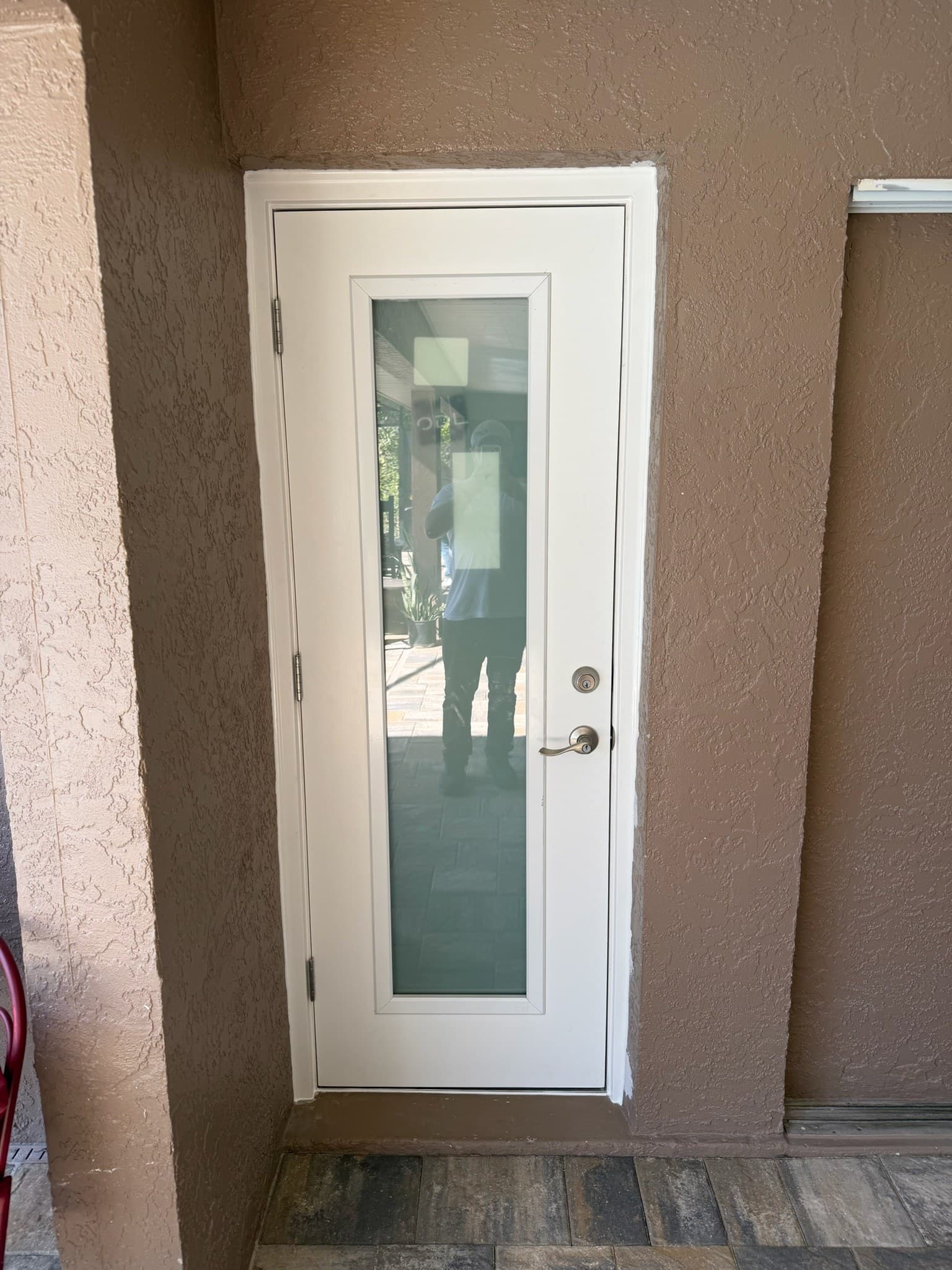
Common calls, and what they usually turn out to be
Door sticks, drags, or won't latch
Usually a settled frame or worn hinge, not a reason to replace the whole unit. A door that rubs at the top corner and one that rubs along the latch edge are two different problems with two different fixes, which is why we look before quoting anything.
How we fix it →Rot at the bottom of the jamb or threshold
Common where a door faces weather directly — often repairable if caught before it spreads. Surface rot in the bottom few inches of a jamb can be cut out and pieced in. Rot that's traveled up the leg or into the subfloor underneath is a different conversation, and we'll say which one you have.
How we fix it →Sliding door won't glide, or has come off the track
Rollers and tracks wear out well before the door panel does — usually a hardware fix. The panel's full weight rides on two small wheels, so they flat-spot, and a track packed with grit will chew through a new set in a season if it isn't cleaned out at the same time.
How we fix it →Cracked or broken glass in a door or sidelight
Decorative and plain glass inserts are custom-ordered to that door's pattern and size — a glass job, not a new door. Matching an existing decorative pattern isn't always possible on older doors, and when it isn't, we'll tell you that before ordering rather than after.
How we fix it →Lock, deadbolt, or strike plate won't align
Almost always a settled hinge side, not a bad lock — realigning the jamb usually fixes it in one visit. If you're lifting or leaning on the door to get the deadbolt to throw, the lock is fine and the frame has moved.
How we fix it →French doors that don't close flush against each other
A hinge or astragal adjustment, not a reason to replace a matched pair. French doors are less forgiving than a single door because any error shows up doubled right down the middle where both edges meet.
How we fix it →Storm door closer, hinge, or screen damage
Hardware-level fixes, usually done in one visit. Closers are the most common: they lose tension, slam, or stop holding the door open, and they're a cheap, quick swap rather than a new storm door.
How we fix it →Draft around a door that looks fine
Weatherstripping and threshold adjustment — cheap, and often the whole fix. Most adjustable thresholds have screws that raise the sill back up against the sweep after years of compression, and most people never know they're there.
How we fix it →Jamb rotted through completely, or the door's been out of square for years? That one's a replacement. For the longer version, we've written up sliding door repair and cracked glass repair on the blog.
What we repair
Entry doors
The door that gets used and judged the most — hinges, locks, and weatherstripping wear fastest here.
Patio & sliding doors
Rollers, tracks, and alignment first, before assuming the whole panel or frame needs replacing.
Storm doors
Closers, hinges, and screens — small parts that fail long before the door itself.
French & cellar doors
Paired-door alignment, or hardware on a bulkhead/cellar entry — less common calls, still ones we take.
What a door repair visit actually looks like
- 01
- Look at it — most door problems are diagnosed on sight: the jamb, the hinges, the hardware, or the weather seal.
- 02
- Parts ordered if needed — glass is custom-matched, most hinges and hardware are stock.
- 03
- Fixed, usually in one visit — a settled jamb or worn roller rarely needs a second trip.
The parts of a door repair that don't show up on a line item
The adjustment itself is often ten minutes. These are the rest of the visit.
We work around the opening being in use
An entry door is the way in and out of your house. Most repairs are staged so the opening isn't standing open longer than it has to be, and never overnight.
Hardware gets reused where it's good
A solid handleset or deadbolt doesn't need replacing because a hinge failed. We reuse what's still right and only price what actually has to change.
The door is left operating, not just closed
It opens, latches, locks, and seals against the stop before we leave. A door that closes but needs a shoulder isn't a finished repair.
Old material leaves with us
Broken glass, spent weatherstripping, bent hardware, and rotted jamb pieces go with the crew, not to your curb.
When we'll tell you to replace instead
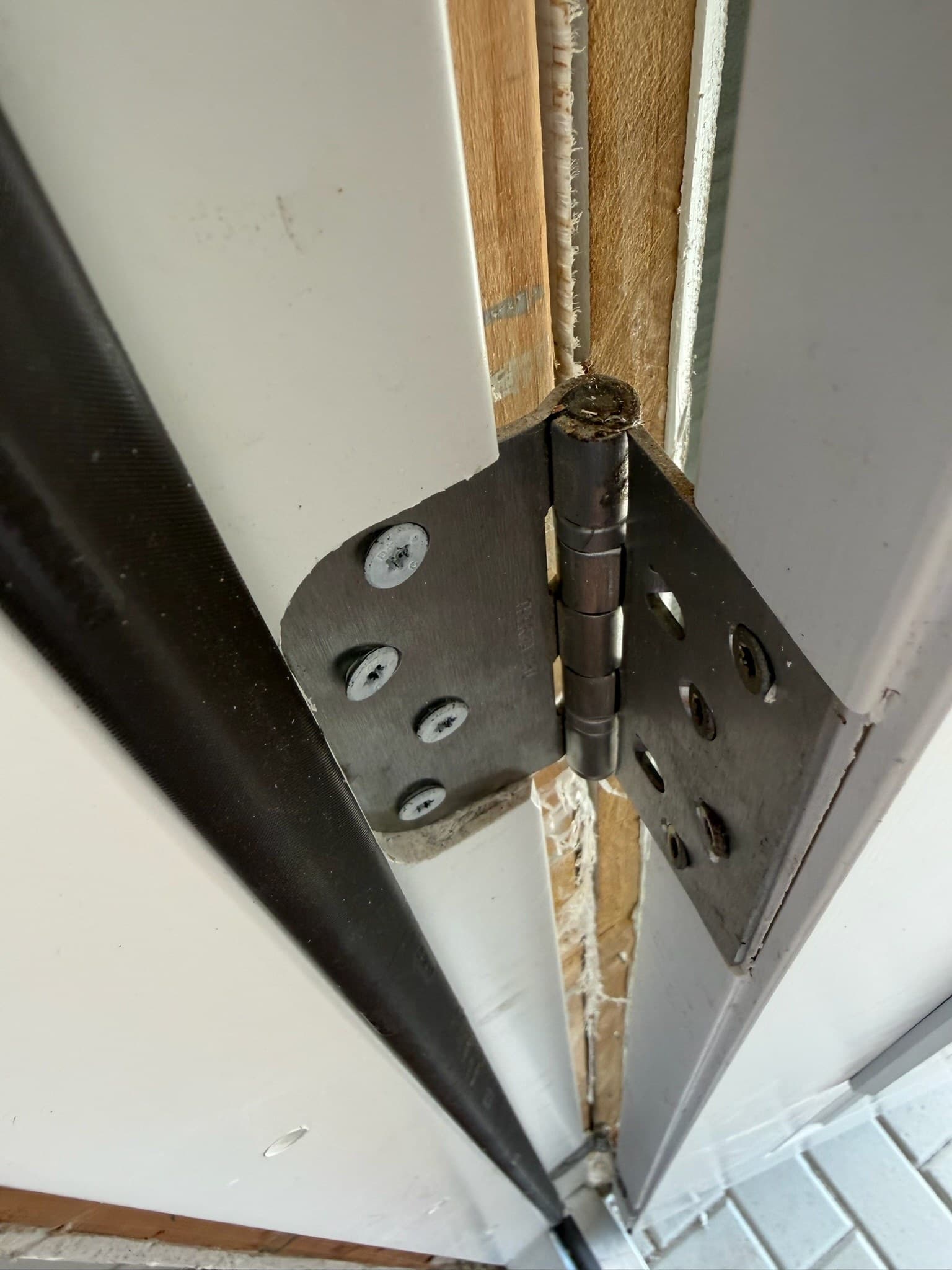
We hang new doors and we fix old ones, so there's nothing in it for us in stretching a repair that won't last. The honest cutoffs: rot that has gone through the jamb leg rather than sitting in the bottom few inches, a frame that has racked far enough out of square that shimming it back would fight the wall around it, a slab that's warped across its width so no hinge adjustment brings the edge flat to the stop, and steel doors that have rusted through from the bottom up rather than just at the surface.
Everything short of that list is usually worth fixing first, and we don't need you to commit to a replacement before we're willing to come look.
Repair or replace? →A five-minute look usually tells us which one it is.
Send a couple of photos or have us out for a quick look — most door repairs are diagnosed on sight, before any quote is written.
Door repair, frequently asked
Can a sliding door be repaired without replacing the whole thing?
Almost always. The rollers and track carry the weight and wear out first, and both are serviceable without touching the glass panel or the frame around it.
How much does door repair typically cost?
It depends on what's actually wrong — a hinge or roller adjustment costs far less than a glass replacement, and glass is always custom-matched to that door. We give you a real number after we've looked at it.
Do you repair storm doors and screen doors too?
Yes. Closers, hinges, and screens are some of our most common calls, and they're usually a same-visit fix rather than a full storm door replacement.
Can a door that's out of square actually be fixed?
Often, yes. A settled or racked jamb can usually be reset and shimmed so the door hangs and latches correctly again — full replacement is only the answer once the jamb itself has failed structurally.
Do you repair doors you didn't originally install?
Yes. Most of our repair calls are on doors someone else installed, sometimes years earlier. We don't need to have hung the door originally to fix it.
What if the door actually needs to be replaced?
We say so plainly and quote replacement separately, with no pressure to decide on the spot.
PA HIC #PA227671 · Lancaster County, PA