
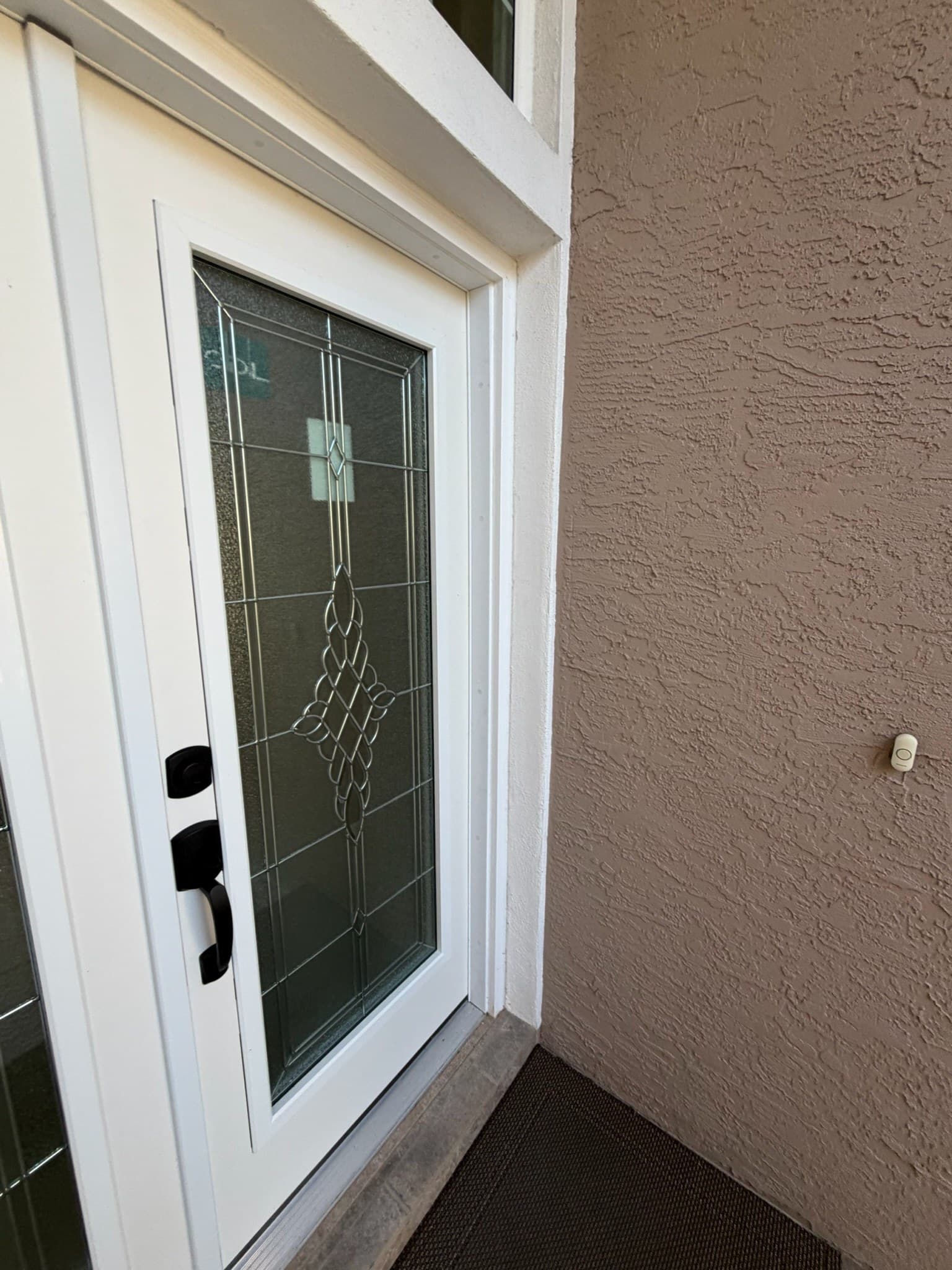
Two ways glass is set into a door, and why it matters
Before we order anything, we look at how the glass is actually held in place, because the two methods repair differently. A lot of modern doors use a removable glass frame, a separate insert with its own moulded or metal surround that snaps or screws into a cutout in the door slab. On those, the whole insert comes out as one unit, which means the door leaf itself is never touched, only the frame and the glass inside it. Older doors, and some higher-end wood doors, more often have glass set directly into the slab with wood stops nailed or screwed around the opening and a bead of glazing compound sealing the edge. That method takes longer, since the stops have to come off cleanly without splitting them, the old glazing compound has to be removed, and new glass gets bedded and re-glazed the same way the original was. Knowing which one we're dealing with before ordering is most of what determines the timeline.
Matching decorative patterns, and the honest limits on older doors
Decorative glass, leaded, beveled, or textured, is usually tied to a specific door model from a specific manufacturer rather than a generic catalog item. Part of the job is identifying that pattern before we order anything, which sometimes means a manufacturer stamp or model number on the door hardware, and sometimes means working from the glass itself. When the door or that exact insert style is still in production, matching it is straightforward. When it isn't, and the manufacturer has changed their glass options or gone out of business entirely, an exact match may not exist anymore. What we can usually do is get close, a similar bevel pattern and a similar level of privacy and light from a current glass line, and if the door has matching sidelights, sometimes the more honest move is replacing all of the glass together so everything matches each other rather than leaving one visibly different pane next to two older ones. We'll tell you plainly what we can match exactly and what we can only approximate before you pay for anything, not after the new glass arrives.
What the actual swap looks like on site
The visit itself splits into two trips more often than one. On the first, we take the exact opening measurement, not the glass size but the frame or cutout it has to fit into, since a removable insert and a stop-glazed opening are each measured slightly differently to leave the right clearance for expansion. That measurement, along with the pattern and coating details, goes into the order. On the second visit, once the glass is in hand, the old material comes out first: broken shards cleared safely, old glazing compound scraped back to bare wood on a stop-glazed door, or the insert's fasteners removed on a frame-style unit. The new glass gets dry-fit before anything is sealed permanently, checked for square in the opening and even clearance on all four sides, then bedded with fresh glazing compound or gasket material and the stops or frame reinstalled. We clean up the old glazing debris and any broken glass before we leave rather than leaving it for the homeowner to sweep up later.
Tempered safety glass is not optional
Any glass in a door, and any glass in a sidelight within the distance defined by code from the door's edge, has to be tempered or laminated safety glass. That's true regardless of what was originally installed, so we don't quote or install standard annealed glass in these locations even on an older door that may have had it decades ago. This matters for timing as much as safety: tempered glass is heat-treated after it's cut to final size, which means it can't be trimmed down afterward the way ordinary glass can. The measurement taken at your door has to be exact before the order goes in, because a piece cut an eighth inch off gets remade, not adjusted on site.
Insulated glass units that have fogged, not cracked
Many newer doors, especially full-view and half-glass entry doors, use an insulated glass unit rather than a single pane, two sheets of glass sealed together at the edge with a spacer and a gas or air fill between them. If that seal fails, moisture gets between the panes and you get a permanent haze or visible condensation that cleaning the surface never touches, because the moisture is inside the sealed cavity, not on the glass. There's no repairing a failed seal. The whole sealed unit gets replaced, matched to the existing frame or insert dimensions, the same as a cracked pane would be. If you're trying to figure out which problem you actually have on a door with an insulated unit, our piece on how glass repair actually gets priced covers the difference between a single-pane repair and a sealed-unit replacement in more depth.
Securing the opening while custom glass is on order
Custom glass, especially anything tempered or pattern-matched, isn't a same-day part. It typically takes a stretch of days to a couple of weeks depending on the type and how custom the cut is, and we don't leave a door unusable for that whole window. If the door still functions, meaning the crack hasn't compromised the frame or left an open gap, it often stays in service as is until the new glass arrives. When there's an actual opening, a fully shattered pane or a sidelight that had to come out, we board it from the interior in a way that keeps the door secure and weather-tight without leaving an obvious gap on the street-facing side. Either way we'll give you a real timeline at the point we measure, not a guess meant to get the job booked. For the door leaf itself, whether this is a glass-only job or something involving the frame around it, the full range of what we handle is on the door repair page, and a couple of clear photos of the break usually tells us most of what we need before the first visit.
Frequently asked questions
Can you replace just the glass in a door, or does the whole door need to come out?
Almost always just the glass. Most modern doors use a removable glass frame that comes out as its own unit without touching the door slab. Older doors with glass set directly into the wood take a bit more work, removing the stops and old glazing compound, but the door leaf itself still stays in place.
Why does door glass have to be tempered?
Building code requires tempered or laminated safety glass in doors and in sidelights within a set distance of the door's edge, regardless of what was originally installed. Tempered glass is heat-treated after cutting, so it can't be trimmed afterward, which is why an exact measurement before ordering matters more than it does for ordinary window glass.
Can you always match decorative glass in an older door?
Often, but not always exactly. If the door's manufacturer still makes that pattern, matching it is straightforward. Older or discontinued proprietary patterns sometimes can't be reproduced pane for pane, and in that case we'll tell you honestly what we can get close to before you commit to ordering anything.
How long does it take to get replacement door glass?
It depends on the type. A standard tempered pane in a common size can move faster, while a custom-matched decorative pattern or an insulated unit takes longer, often a stretch of days to a couple of weeks. We give you a real timeline once we've measured and confirmed exactly what has to be ordered.