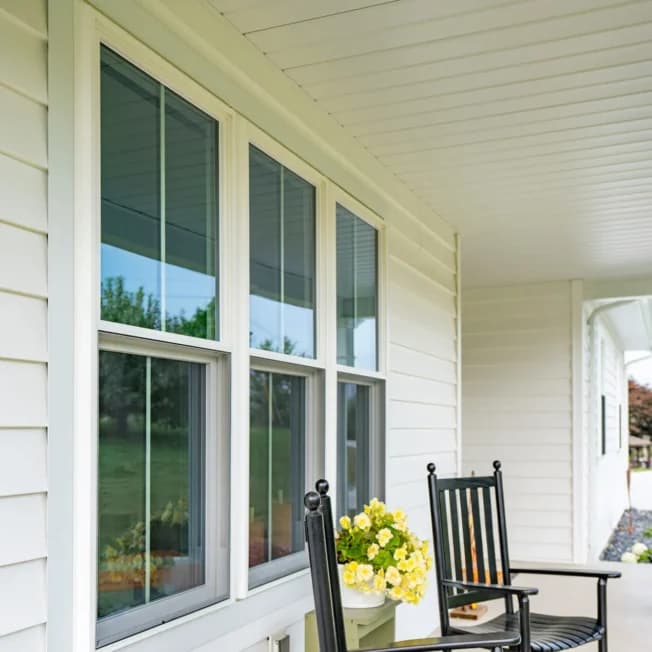
A cracked window pane is almost always a glass-only repair, not a whole-window replacement. Once we measure the opening and the new glass is cut, the install itself is usually fast, often under an hour per pane. What actually drives the cost and the timeline is the size and type of glass involved, plus how custom the opening around it is.
That's the short version. The longer version is that "cracked window" covers a few different situations that get fixed in different ways, and knowing which one you've got before you call someone saves everybody time. A single cracked pane in an old double-hung is a different job than a cracked insulated unit in a ten-year-old vinyl window, which is different again from a spiderwebbed decorative panel in a front door. If you haven't already worked through the basics of diagnosing what's wrong with a window, our window repair diagnosis guide is a good place to start before you dig into glass specifically.
What actually cracks glass
Glass doesn't crack for no reason, even when the crack seems to show up overnight. A few causes account for almost every cracked pane we see around Lancaster County.
Thermal stress is the one people don't expect. Glass expands and contracts with temperature, and if one part of a pane heats up faster than another, say half the window sits in direct sun while the other half is shaded by a tree branch or an awning, the glass can crack right along that stress line. This happens more with darker tinted glass, and more with glass that already has a small chip or scratch at the edge, since that's exactly where the stress concentrates.
A small chip is its own cause. A tiny rock kicked up by a mower, a stray branch, a ladder bumping the frame, none of that looks like much at the time. But a chip at the edge of a pane is a weak point, and normal thermal cycling through a Pennsylvania summer and winter is often enough to walk that chip into a full crack months later.
Direct impact is the obvious one: hail, a baseball, a branch coming down in a storm. Those cracks usually show up all at once and don't need much explaining.
The cause people miss is mechanical stress from the frame itself. If a window frame is slightly out of square, whether from age, settling, or a rough install years ago, the glass can sit under constant pressure even when nothing ever hit it. A pane that's being squeezed unevenly by its own frame will eventually crack on its own, usually starting at a corner. That one matters, because replacing the glass alone doesn't fix the actual problem. More on that below.
Single pane vs. insulated glass: different repair
Older double-hung windows, the kind you'll find throughout a lot of Lancaster County's older homes, often still have a single pane of glass in each sash. Repairing one of these is about as straightforward as glass repair gets: we measure the exact opening, order glass cut to that size, and glaze it in using the same method, or something close to it, as what's already there. It's not stocked in a standard size at a hardware store. Glass in a window this old is almost never a perfect square, so it gets custom cut every time.
Most windows installed in the last twenty-five years use insulated glass units instead, usually called IGUs. That's two, or sometimes three, panes of glass sealed together at the edges with a spacer, with either air or an inert gas like argon filling the gap in between to cut down on heat transfer. If one pane inside that sandwich cracks, you're not just replacing a sheet of glass, you're replacing the whole sealed unit, because the seal itself is part of what makes the window perform the way it's supposed to. The Department of Energy has a good overview of how coatings and gas fills affect a window's efficiency, worth a look if you're deciding what to order as a replacement.
Both cases get custom-ordered to your exact window, matched to the coating and tint already installed. Neither one is something you buy off a shelf and cut down at home, whatever a few DIY videos might suggest. If what you're actually dealing with is a cloudy or foggy pane rather than a visible crack, that's a related but different problem, a failed seal rather than broken glass, and we cover that separately in our piece on what a failed window seal actually means.
Front door glass is its own thing
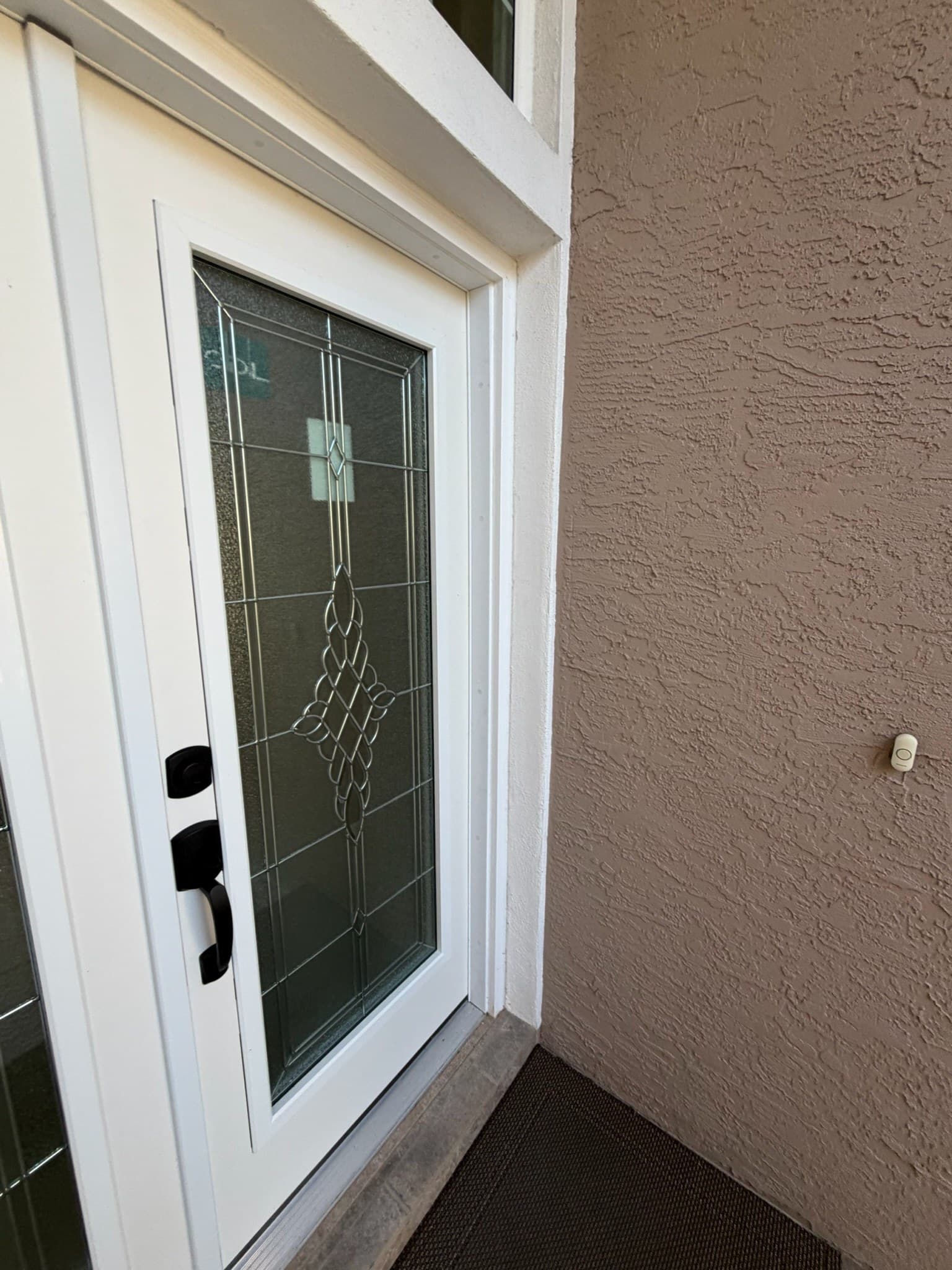
Entry door glass gets its own section because it behaves differently than window glass. A lot of front doors, especially anything installed in the last fifteen or twenty years, use a decorative glass insert: leaded, beveled, textured, or some combination, set into a specific cutout in the door slab. That insert is often tied to a specific door model from a specific manufacturer, which means the exact pattern isn't something you can walk into a glass shop and order off a generic list.
Here's the honest part. If that pane cracks and the door, or that exact insert style, is no longer made, or the manufacturer has changed its glass options since your door was installed, we may not be able to match the pattern exactly. What we can usually do is get close: a similar bevel pattern, a similar level of privacy and light, from a current glass line. If your door has matching sidelights on either side, sometimes the more honest move is replacing all of the glass together, the door insert and both sidelights, so everything matches each other rather than leaving one obviously different pane next to two older ones. It's not the answer everybody wants to hear, but pretending a fifteen-year-old proprietary pattern can always be reproduced exactly isn't honest either. We'll tell you upfront what we can match and what we can only get close to, before you pay for anything. For the door itself, whether it's the glass or the door leaf underneath it that needs attention, our door repair page covers what that looks like.
When a crack means more than glass
Most cracks are just glass. But a crack that keeps growing, especially one that shows up again after a repair, or one that runs corner to corner rather than starting from a clear impact point, can be a sign that the frame around it is racking, meaning it's slowly twisting out of square. That's usually happening at the structural level: foundation settling, a header sagging slightly, or a house that's simply moved over the decades the way older homes do.
When that's what's going on, replacing the glass again is a temporary fix at best. The new pane will sit under the same uneven pressure as the old one and can crack again on its own timeline. In that situation the honest conversation isn't about glass at all, it's about whether the window opening itself needs to be addressed, sometimes reframed, before a new unit goes in. It's a bigger job, and a different one, than what most people expect when they call about a crack. If you want a general sense of whether what you're looking at is repair-scale or something bigger, our repair or replace breakdown walks through the signs either way.
Common mistakes
A few mistakes come up often enough that they're worth calling out directly.
- Taping over a crack and leaving it through a winter. Packing tape or weatherproofing tape over a crack might stop a draft for a week, but it doesn't stop the glass from moving. A full Pennsylvania winter of temperature swings, cold nights into sunny afternoons, will usually walk that crack further, sometimes turning a small corner crack into a pane that needs replacing in the coldest part of the year instead of on your own schedule.
- Assuming any crack means the whole window has to go. We get calls from people who assume a crack is a death sentence for the entire window, frame included. Most of the time it isn't. A cracked pane in a frame that's otherwise square, weatherproofed, and operating fine is a glass repair, full stop. We'd rather quote the smaller job when that's genuinely what's needed.
- Ordering replacement glass without confirming the coating and tint. Low-E coatings, the microscopically thin metallic layer that cuts down on heat transfer, are directional. They're applied to a specific surface of the glass, and they vary between manufacturers and even between product lines from the same manufacturer. Order a pane with the wrong coating or tint and it'll look visibly different from the panes around it, slightly more reflective, a different shade of green or gray, even if the size is exactly right. It's an easy mistake to make ordering glass sight unseen, and an expensive one to fix after the fact.
We'd rather quote a straightforward glass swap than talk someone into a full window replacement they don't need. It's a smaller job, a smaller invoice, and it solves the actual problem, so there's no reason to make it bigger than it is.
At the same time, we're not going to tell you a crack is "just glass" when the frame behind it is the real issue, because that just means paying for the same repair twice. A company that does both repair and replacement should be able to look at a cracked pane and tell a customer honestly, on the spot, which one they actually need, not steer them toward whichever job happens to pay better that week.
Frequently asked questions
How much does it cost to fix a cracked window?
It depends more on the glass than on labor. A single pane in an old double-hung costs less than a full insulated glass unit, and a standard clear pane costs less than one with a Low-E coating or a specific tint. Custom shapes and hard-to-reach openings add to it too. For real numbers instead of a range that may not apply to your window, see our window cost guide.
Can a cracked window pane be repaired or does it need full replacement?
Almost always it's a repair. If the frame is square, the weatherstripping is intact, and the window otherwise operates fine, replacing just the glass solves the problem. Full window replacement only makes sense if the frame itself is damaged, rotted, or out of square, or you're already replacing several windows in the same project anyway.
How long does cracked glass repair take?
The visit to measure and diagnose the crack is quick, often twenty to thirty minutes. The glass itself is custom cut to your opening, so it typically takes several days to a couple of weeks to arrive depending on the type and coating. Once it's in hand, the actual install is usually well under an hour per pane.
Is a cracked window dangerous?
It can be, depending on the crack. A hairline crack in tempered or laminated glass is usually stable for a while, but any crack lets in air and moisture and can spread further with temperature swings. A crack near an edge or corner, or one low enough for kids or pets to reach, is worth getting looked at sooner rather than later.
Can you match glass in an older or patterned window?
Often, but not always exactly. Clear glass and common Low-E coatings match closely across manufacturers. Decorative or leaded patterns, especially older or proprietary designs, sometimes can't be reproduced pane for pane if the original manufacturer has discontinued that style. We'll tell you honestly before ordering whether we can match it exactly or only get close.
Get an honest look at your cracked window
Send us a couple of photos or have us come measure it. We'll tell you straight whether it's a glass swap or something bigger.
Get a Quote