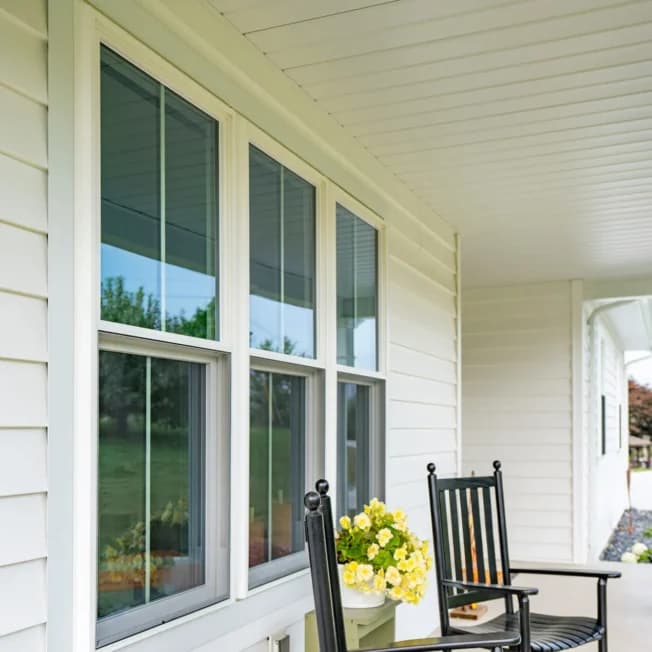
If your double-hung window slides up fine but won't stay there on its own, the window probably isn't broken. The balance mechanism built into the frame, the part whose whole job is to counteract the weight of the sash, has worn out or failed. It's one of the cheaper, faster repairs in this trade, not a reason to start pricing a replacement.
Every double-hung window has two sashes that slide up and down inside a pair of vertical tracks. Gravity wants to pull each sash straight down, so something has to fight that pull and hold the sash wherever you leave it. That something is the balance, and it's a mechanical part with a working life, not a permanent feature of the window. When it wears out, the sash stops holding position and starts sliding shut under its own weight, which is how a lot of windows around Lancaster County end up propped open with a paint stick, a phone book nobody has opened in a decade, or whatever was within arm's reach on a Tuesday afternoon. If you want the fuller picture of how to sort this kind of problem from every other kind of window complaint, our window repair guide walks through the whole diagnostic process before you call anyone.
The old-house version: sash cords and weights
Older double-hung windows, the kind found in most homes built before the 1950s and plenty built after, balance the sash with a cord-and-weight system. A cast iron weight sits inside a hollow pocket built into the window's side jamb, hidden behind the interior trim. A cord, or sometimes a thin chain, runs from the side of the sash, up and over a small pulley mounted at the top of the jamb, and down into that pocket where it's knotted to the weight. Raise the sash and the weight drops. Lower the sash and the weight rises. The weight is sized to roughly match the sash, so at any height the two forces cancel out and the window just stays put.
Cord wears out. It rubs against the pulley wheel every time the window moves, it sits through decades of temperature swings inside a wall cavity that isn't insulated the way the rest of the house is, and eventually it frays through and lets go, usually without warning. When that happens, the weight drops to the bottom of the pocket and the sash loses its counterbalance on that side. You'll often feel it as one corner of the sash going suddenly heavy, or the whole window slamming down instead of gliding.
None of that means the window is bad, and it's not a reason to tear out an original wood sash that's otherwise solid. A technician pulls the interior stop molding, opens the weight pocket, retrieves the weight, and re-threads new cord, sometimes upgrading to a chain, which doesn't fray the same way rope does. It's fiddly work because the parts are hidden inside the wall, but it isn't exotic, and it's exactly the kind of repair that makes sense on the older housing stock we cover in windows and doors on older homes and in more depth in replacing or restoring windows in an old house. If you want to see just how much there is to this mechanism and why it was standard for the better part of a century, This Old House has a good rundown of how it works.
The modern version: spring and spiral balances
Vinyl double-hung windows, along with most contemporary wood and fiberglass windows, skip weights entirely. The balance is a spring mechanism built into a channel routed into the side jamb, out of sight unless the sash is removed. Two types show up on most double-hung vinyl window repair calls: a coil spring balance, where a wound spring inside a tube provides steady tension, and a spiral or "constant force" balance, where a flat steel rod is preloaded with torque and sits inside a plastic tube. Either way, a small shoe rides in the jamb channel and connects to a pin on the side of the sash, so the tension in the spring transfers directly to the weight of the glass and frame.
These balances fail in a more mundane way than cords do. The spring loses tension after years of cycling, the plastic shoe cracks or wears out of its track, or the tube binds up with old lubricant and dust instead of gliding smoothly. The fix is usually to unclip the sash from the balance shoes, pull the worn balance out of the jamb channel, and drop in a new one matched by length and tension rating to the original. On most vinyl double-hung window repair jobs this does not touch the sash, the glass, or the frame at all, just the balance itself, which is a part we keep stocked because it comes up so often.
The telltale signs it's a balance problem, not something worse
A handful of signs point specifically at a failed balance:
- The sash slides up and down freely, with no scraping or binding, but it won't hold its position once you let go.
- One side of the sash sits noticeably lower than the other when you stop it halfway, instead of staying level.
- There's currently something wedged under it. A paint stick, a yardstick, a hardcover book that's been doing balance duty since before you can remember why. If that sounds familiar, you already know the diagnosis.
- The window has dropped shut on its own, sometimes hard enough to startle whoever was standing nearby.
What a balance problem is not: haze or fog trapped between the panes of glass, which means the seal between the panes has failed and moisture has worked its way into the gap, a completely different repair covered in our piece on foggy and cloudy window seals. It's also not the same issue as a sliding patio door that drags or won't roll, which is almost always a track and roller problem rather than a balance problem, covered separately in sliding patio door repair. And it's not the same as visibly soft or crumbling wood around the frame itself, which points toward rot rather than hardware and changes the repair-versus-replace math entirely.
Common mistakes
- Living with the prop for years. The instinct makes sense, propping the window costs nothing and it works today. But a balance repair on a vinyl window is usually a twenty to thirty minute job per sash. We regularly meet homeowners who lived with a propped window for years, sometimes assuming it meant a whole new window, before finding out it was a small parts swap.
- Forcing a stuck or partially failed balance. If a spiral balance is starting to bind and the sash gets cranked up and down anyway, the rod can snap outright or the shoe can tear loose from its channel, turning an easy balance swap into a job that also needs a new track piece. The same goes for an old cord that's fraying, forcing a heavy sash against a weakened cord is usually what finishes it off for good.
- Assuming the whole window needs to go. This is the big one. A dead balance says nothing about the condition of the frame, the glass, or the weatherstripping. We've replaced balances in windows that were otherwise in excellent shape with another couple of decades of service left in them.
- Buying a generic "universal" balance and hoping it fits. Balances are sized by length and by tension, matched to the actual weight of the sash they're holding. A mismatched balance either won't hold the sash at all or holds it so stiffly that opening the window turns into a workout.
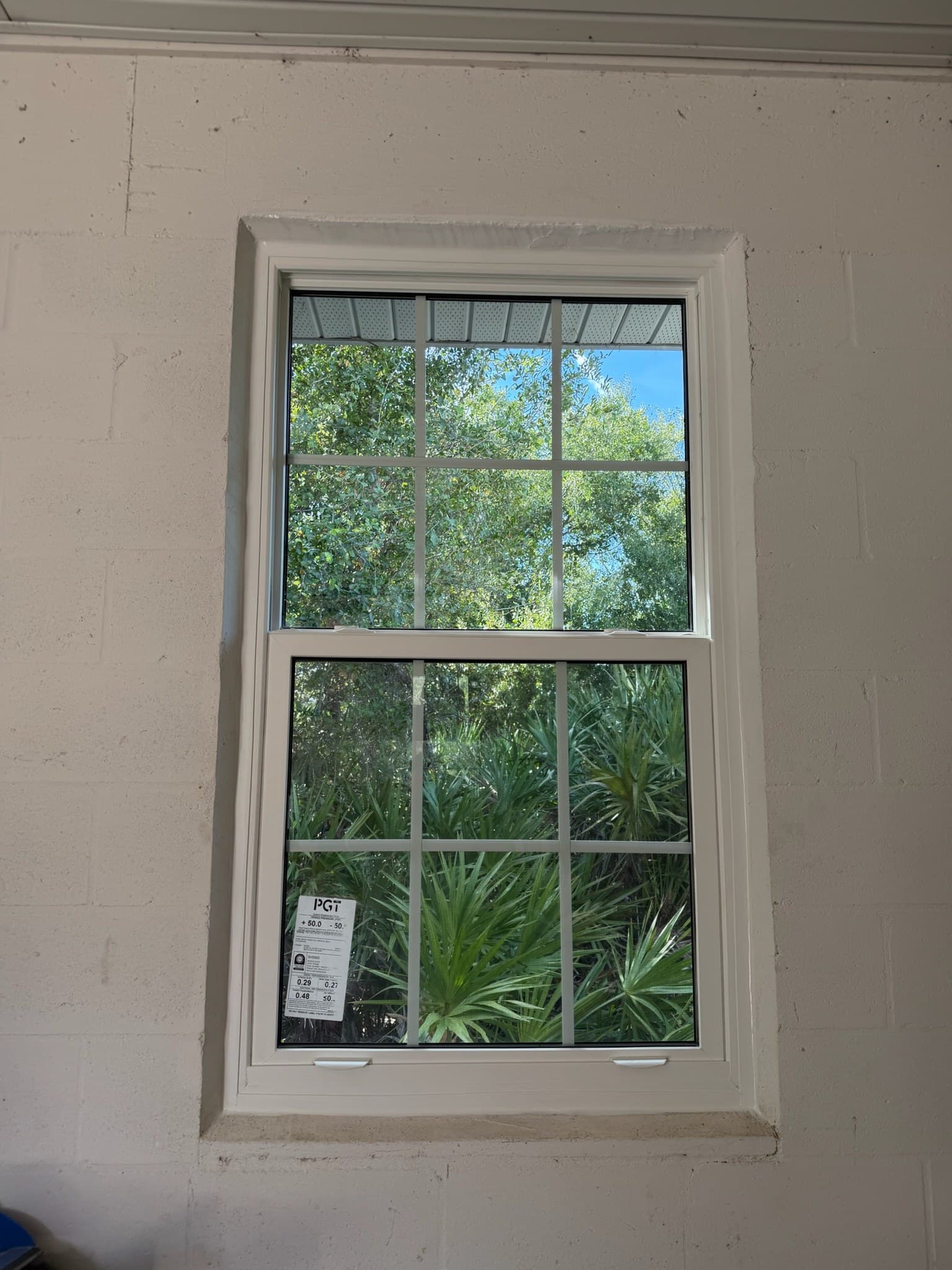
We could make more money quoting a new window every time that call came in. We don't, because a balance is a cheap part and half an hour of labor, and the sash, the glass, and the frame around it are usually fine. If we replaced windows every time a balance failed, we'd be replacing windows that didn't need it, and eventually people figure that out.
Frequently asked questions
Why does my window fall down when I open it?
The balance mechanism that's supposed to hold the sash in place has failed. On an older wood window, a sash cord has probably snapped and the counterweight dropped inside the wall. On a vinyl window, a spring or spiral balance inside the jamb channel has lost tension or come loose from its shoe. Either way, it's a hardware repair, not a sign the window itself is failing.
Can a window balance be repaired without replacing the window?
Yes, in the large majority of cases. The balance is a separate part from the sash, the glass, and the frame, so a technician can access it, whether that's a weight pocket behind old trim or a channel in a vinyl jamb, and swap just that piece. Full replacement only makes sense if the frame or sash has failed too.
How much does it cost to fix a window balance?
It's one of the least expensive repairs we do, typically well under what most homeowners expect to pay for anything involving a window. The exact price depends on whether it's a cord-and-weight system that needs trim removed or a straightforward vinyl balance swap, and on how many sashes need it. We measure and quote it on site rather than guessing over the phone.
Is this only an old-house problem?
No. Cord-and-weight failures are common in older wood windows, but vinyl and newer wood double-hung windows have their own balance system, a spring or spiral mechanism in the side jamb, and it fails just as often once it's had enough years of use. We see balance calls on windows installed within the last decade almost as often as on original wood sashes.
Can I fix a window balance myself?
On some vinyl windows, yes. If the sash tilts in for cleaning, a motivated homeowner can sometimes access and swap the balance with the correct replacement part matched to length and tension. Cord-and-weight systems are a harder DIY project since they involve removing trim and working inside the wall cavity. If you're not sure which type you have, it's worth a quick call before pulling any trim off.
Window won't stay up on its own?
Send us a couple of photos or describe what it's doing, and we'll tell you honestly whether it's a balance repair or something more, then quote it on site.
Get a Quote