
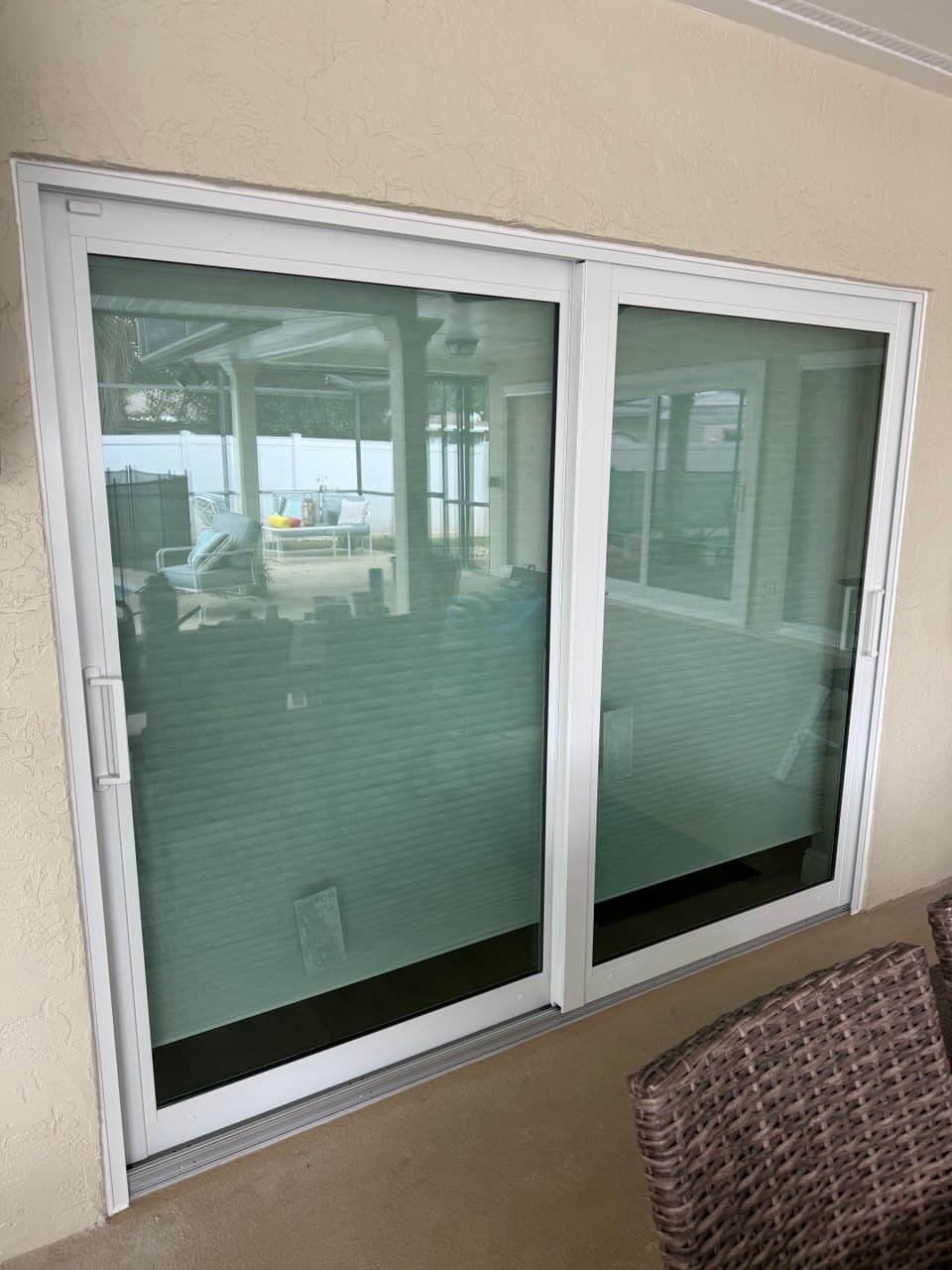
Four seal points, and why they wear at different rates
A door has four places where weatherstripping has to do real work, and they don't fail at the same pace. The hinge side sees almost no rubbing from normal use, since the door doesn't move much relative to the stop on that edge, but it's exposed to sun and heat for years and can go brittle or crack even without much physical wear. The latch side takes the opposite kind of abuse: every time the door slams shut, that seal gets compressed hard, and it's usually the first of the four to show visible damage. The head, the strip across the top of the frame, wears moderately and gets overlooked simply because it's above eye level and nobody checks it. The sweep at the bottom has the shortest life of all four, taking foot traffic, moisture, grit tracked in on shoes, and direct sun if the threshold isn't shaded, and it's the one most people notice failing first because a draft at floor level is the easiest kind to feel.
Adjustable thresholds: the screws almost nobody notices
Most aluminum thresholds are adjustable, with small screws set into the face or the interior channel of the sill, usually every several inches along its length. Those screws raise or lower the threshold cap itself, and after years of the sweep compressing it, turning them can lift the sill back up to meet the sweep again without buying any new material at all. Most homeowners have never noticed these screws exist, often because they're under a coat of paint, grime, or a doormat that's sat in the same spot for years. It's one of the cheapest possible fixes for a drafty door, and it's worth checking before assuming the sweep or the whole threshold needs replacing.
Kerf-in versus adhesive-backed weatherstrip
There are two fundamentally different ways weatherstripping attaches, and they age differently. Kerf-in strip fits into a thin slot, a kerf, milled directly into the door or jamb edge during manufacturing, with a rigid backing that slides or snaps into that slot and holds securely for a long time, often a decade or more before it needs attention. Most factory-installed weatherstripping on a reasonably modern door is kerf-in. Adhesive-backed foam or rubber strip, by contrast, sticks directly to the surface with peel-and-stick backing. It's easier to retrofit onto a jamb that was never milled with a kerf, but it has a noticeably shorter service life, often needing to be redone every few years rather than lasting a decade, since the adhesive itself degrades with temperature swings. We use kerf-in wherever a kerf already exists or can reasonably be added, and reserve adhesive-backed strip for jambs where cutting a kerf isn't practical, or as a quick interim fix while a bigger repair gets scheduled.
The dollar-bill test and the daylight test
We use two simple tests to find exactly where a seal is failing rather than guessing at which side needs new material. The dollar-bill test: close the door on a dollar bill at several points around the frame, latch it, then pull the bill out. Even, light resistance the whole way around means the seal is doing its job at that point. A spot where the bill slides out with no resistance at all is a gap. The daylight test works from the inside, either at night with the exterior light on or during the day looking for points of light around the frame, and it's sometimes faster at pinpointing exactly where a gap is than the feel-based dollar-bill method. We generally use both, since they catch slightly different kinds of gaps, a compressed seal that still resists a light pull but lets air through, versus an actual physical opening you can see light through. It's the same basic diagnostic logic covered in our general window and door repair diagnosis guide, just applied at the door instead of a window sash.
Most of this work is inexpensive relative to almost anything else on the house, and it's often the whole fix for a door that feels drafty even though nothing about it looks obviously broken. See the rest of what we handle on the door repair page, or reach out and we can usually tell you which of the four seal points needs attention before we come out.
Frequently asked questions
My door has weatherstripping and still feels drafty. What's wrong?
Weatherstripping fails at four separate points, hinge side, latch side, head, and the bottom sweep, and they wear at different rates. A door can look fine at a glance while one specific section, often the sweep or the threshold, has compressed or worn through. We use the dollar-bill and daylight tests to find exactly which point is letting air through.
What are the screws on my door threshold for?
Most aluminum thresholds are adjustable, with small screws along the face or interior channel that raise or lower the sill cap. Turning them can lift a compressed threshold back up to meet the sweep again, often solving a draft without buying any new material at all. Many homeowners never notice these screws exist.
What's the difference between kerf-in and stick-on weatherstripping?
Kerf-in strip fits into a slot milled into the door or jamb and holds securely for a long time, often a decade or more. Adhesive-backed foam or rubber sticks directly to the surface, which makes it easier to add where no kerf exists, but it wears out faster, typically needing to be redone every few years.
Why do you recommend doing weatherstripping in fall instead of winter?
Weatherstripping compresses and takes a set at close to the temperature it's installed at. Fitting it in very cold weather, when the door and frame have already contracted, can leave it too tight once warm, humid months swell the wood or vinyl back out. Fall gives a fit that holds through both extremes.