
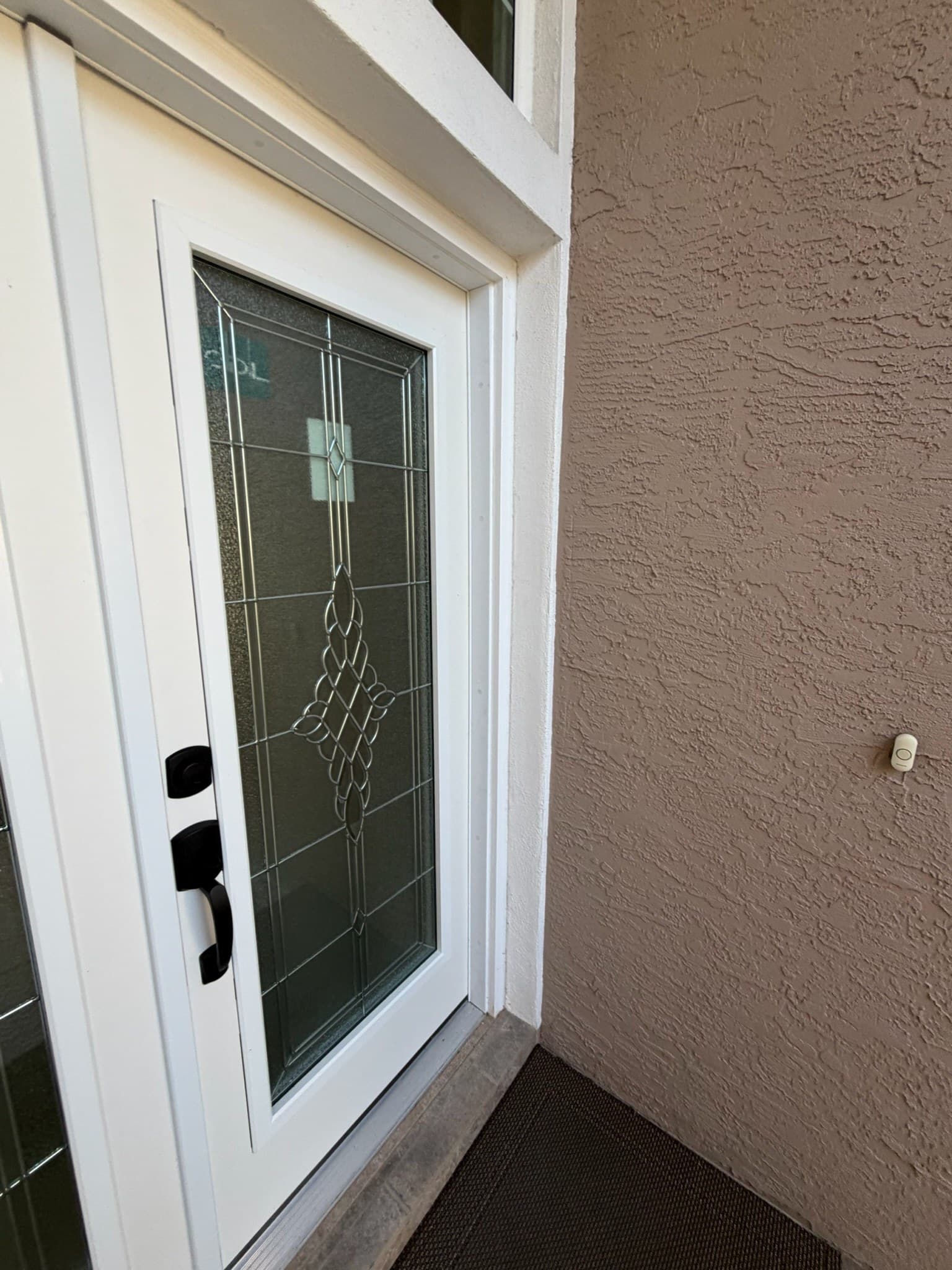
How a fiberglass door is actually put together
A fiberglass entry door is not a solid block of material the way that description makes it sound. It is a molded fiberglass composite skin, most often two of them, one for the front face and one for the back, wrapped around a wood or composite frame that carries the hinges and the lock hardware, with the cavity between the two skins filled with rigid foam insulation. The skins are compression-molded, meaning they're formed under heat and pressure in a die, which is how manufacturers get consistent wood-grain texture or a smooth painted look repeated across every unit.
The frame inside the door matters more than most people assume, because it's what the hinge screws and the lock bore actually bite into, not the fiberglass skin itself. A door with a full wood perimeter frame, stile material running the full height on both edges, holds hardware better over years of use than a door with only small hardware blocks embedded at the hinge and lock locations. It's not something you can see once the door is finished, which is part of why the difference between a decent fiberglass door and a cheap one isn't obvious from a showroom.
Why it doesn't warp when the weather changes
Wood expands and contracts with humidity because it's a natural material absorbing and releasing moisture. Fiberglass composite doesn't do that. The skins are dimensionally stable across the swings a Pennsylvania year throws at an exterior door, a humid August and a dry January cold snap, without swelling, shrinking, or cupping. That stability is the main reason fiberglass became the default entry door material rather than any single feature. A door that stays true in its frame is a door that keeps sealing correctly, which is the whole point of a weatherstrip, and it's a bigger factor in how a door performs over a decade than the finish, the hardware, or the glass pattern people usually shop for first.
The foam core does its own separate job, adding insulation value the skin alone wouldn't have, which is part of why a fiberglass door outperforms a hollow steel slab on comfort even at a similar price point.
Smooth or wood-grain, and how each one finishes
Fiberglass doors are molded in two general textures, and the choice affects what you can do with the finish later, not just how the door looks on day one.
A smooth-skin door is meant to be painted. It takes standard exterior paint the way a smooth wood or composite trim board would, and it's the right choice if you want a solid color, black, a deep navy, whatever matches the rest of the house, rather than a wood look.
A wood-grain door is molded with an actual grain pattern pressed into the skin, deep enough to read as real wood texture under a stain rather than paint. These are meant to be stained, not painted, because the whole point of the texture is to catch a translucent stain the way real wood grain does. A wood-grain door painted a solid color looks like exactly what it is, a molded texture under flat color, which defeats what you paid extra for. If you want the door to actually read as wood from the sidewalk, wood-grain and stain is the combination that delivers it; if you want a clean painted look, smooth skin is the better starting point regardless of final color.
How it takes an impact, compared to steel
Steel dents. A hard, concentrated impact, a ladder set against the door, a bike pedal, hail in a bad storm, leaves a permanent dimple in a steel skin because the metal deforms and stays deformed. Fiberglass responds differently. The composite skin is stiffer and more resistant to that kind of dimpling under normal impacts, which is part of the appeal. The tradeoff shows up at the extreme end: a hard enough impact on fiberglass is more likely to crack or chip the skin at the point of impact rather than dent, and a cracked fiberglass skin is a harder repair than a dented steel one, which can sometimes be worked out or at least is a familiar problem for a body shop-style fix. In everyday use, normal knocks and bumps a household door takes over the years, fiberglass comes out ahead. Neither material handles a genuinely violent impact gracefully.
Fiberglass also doesn't telegraph temperature the way steel does. A steel door left in direct winter sun can get warm enough on the surface to feel it through a glove, then go cold again fast once the sun moves off it, and that temperature cycling is part of what stresses the finish and the seams over time. Fiberglass sits more neutrally across that range.
Where the price actually moves within fiberglass as a category
Fiberglass doors span a wide range, and the differences that drive that range aren't always visible from a catalog photo. Skin thickness and the quality of the internal frame are the biggest factors and the least visible ones. Panel design complexity, raised panels with detailed moulding profiles cost more to mold and tool than a flat or simple two-panel design. Glass is often the single biggest line item on a decorative door, since a large decorative insert with leaded or textured glass can cost more than the door slab itself. And factory-applied finish quality varies enough between manufacturers that two doors described the same way on paper can look noticeably different once they've been in the weather a few years. For a broader sense of how these line items stack up against other materials and glass options, our window and door cost guide walks through what tends to move a quote and by how much.
Frequently asked questions
Is fiberglass better than steel for an entry door?
It depends what you're optimizing for. Fiberglass resists warping and everyday dents better and takes a wood-grain stained finish that steel can't match. Steel is generally the lower-cost option and holds up fine on a side door or a less exposed opening. Neither is universally better, they're different tradeoffs.
Can a fiberglass door be painted a different color later?
Yes, a smooth-skin fiberglass door repaints the same way exterior wood trim does. A wood-grain door can technically be painted too, but doing so hides the texture you paid for, so it's usually only done when someone wants to change the whole look of the entry away from a wood appearance.
Do fiberglass doors fade in direct sunlight?
A factory finish on a quality fiberglass door is formulated to resist UV fading for years, but any exterior finish, on any material, eventually dulls with direct sun exposure. A south-facing door in full sun will show it sooner than one under a porch roof. Refinishing a fiberglass door when it starts to look tired is a straightforward repaint or restain rather than a replacement.
How do I know if a fiberglass door is good quality before buying it?
Ask about the internal frame material, whether it's a full wood perimeter frame or just hardware blocks at the hinges and lock, and check the skin thickness if the spec is available. Those two things predict long-term hardware retention and durability better than anything visible in a showroom. We can walk you through the spec sheet for any door you're considering.