
Five systems, five different failure modes
An entry door behaves less like one object and more like five, each wearing out on its own schedule. Knowing which one is actually causing trouble is the difference between a twenty-minute adjustment and a new unit.
- The slab. The panel itself. A slab that has bowed a quarter inch will latch at the top and leak air at the bottom.
- The frame. Two side jambs and a head. The hinge jamb is the one that matters, because it carries the full weight of the door on three screws per hinge. If it is not plumb, nothing done to the rest of the door fixes how it closes.
- The sill and threshold. Two unrelated jobs at once: it takes every footstep into the house, and it is where water is most likely to get in. Almost all the rot we cut out of door openings starts here.
- The weatherstripping. A compression seal in a kerf in the jamb, plus a sweep on the bottom of the slab. Consumable parts that wear out long before the door does.
- The hardware. Hinges, lockset, deadbolt, strike plates. The part you touch daily, and the one usually blamed for problems the frame is causing.
A door that drags on the latch side has a hinge jamb that has moved, not a slab that has grown. That distinction decides which job you are buying.
Slab only, or the whole pre-hung unit
The door replacement overview covers pre-hung versus full frame. The third option is a slab-only swap, where the frame stays and only the panel changes. It works when several things line up: same thickness, usually one and three quarter inches on an exterior door, hinge mortises in the same places, lock and deadbolt bores at the same backset and height, and identical handing.
A slab is cheaper than a pre-hung unit on paper. In practice it is a labor-heavy job that locks in whatever is already wrong with the frame. If the jamb is out of plumb, the new slab fights you exactly the way the old one did. We suggest slab-only when the frame is genuinely sound and matching original trim matters, and a pre-hung unit nearly everywhere else.
Handing, confirmed before anything gets ordered
Handing is the most common ordering mistake on entry doors and it cannot be undone once the unit is built. Stand outside the house facing the door. Hinges on your left, door swinging away from you into the house, is left-hand inswing. Hinges on the right, same swing, is right-hand inswing. If the door swings toward you while you stand outside, it is an outswing.
Inswing is the default on nearly every American entry door for good reasons. The hinge pins sit inside where nobody can reach them, the weatherstrip compresses against an interior stop, and you can hang a storm door in front of it. You cannot do that with an outswing.
Outswing buys back the floor space the door arc eats, and wind pressure pushes it into its seal rather than away from it. The tradeoff is exterior hinges that need non-removable pins or security studs, and a door that swings out onto whatever people are standing on. On a narrow stoop that is a daily nuisance.
Sidelights and transoms belong to the opening
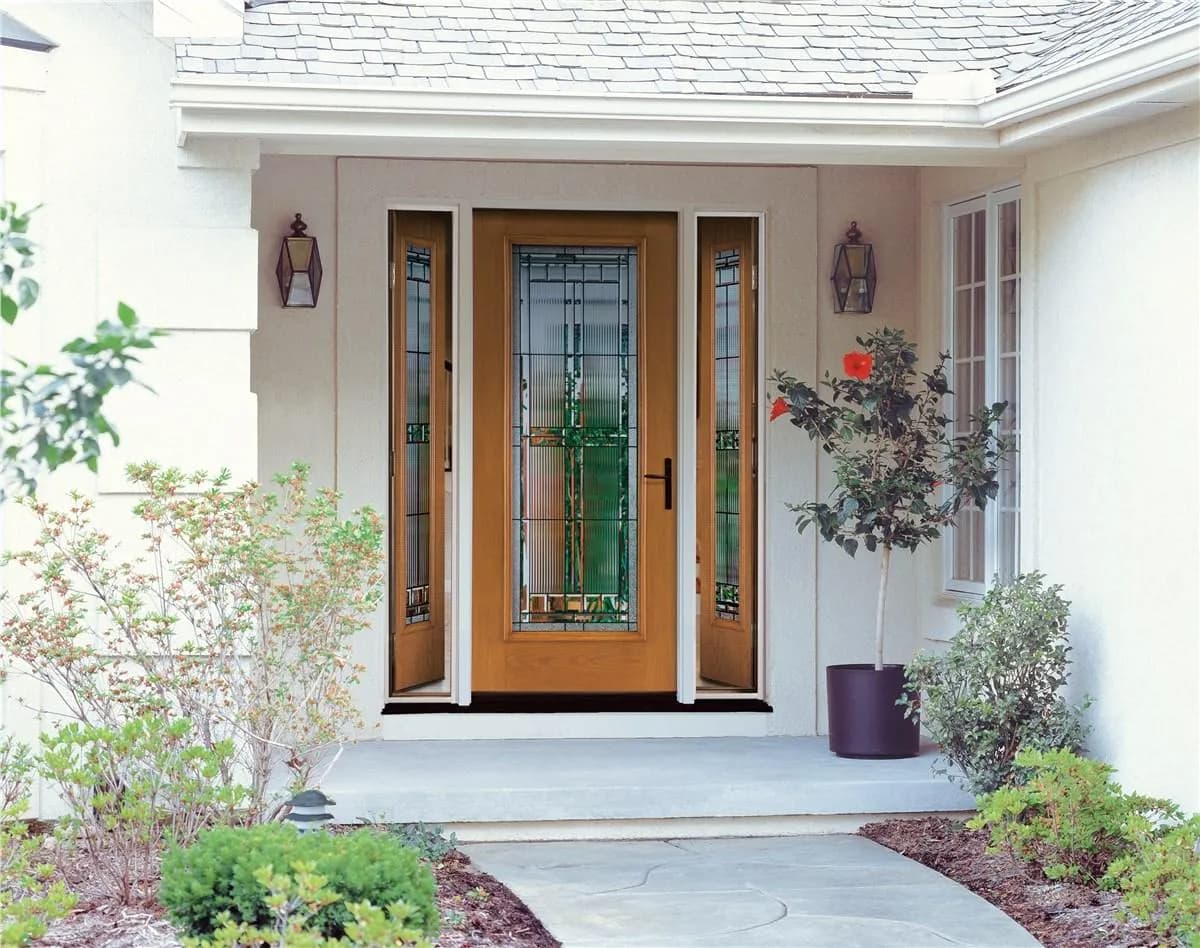
A door with sidelights is not a door plus two windows. It is one mulled unit, with the sidelight frames joined to the door frame along a common post, so the door usually cannot be pulled out of it on its own. If only the sidelight glass has failed, that panel alone can sometimes be replaced, which is worth checking first. Our glass repair cost guide covers how that call tends to go.
Replacing the whole assembly means specifying one glass pattern across the door insert, both sidelights, and any transom. Glass within a set distance of a door edge also counts as a hazardous location under code and has to be tempered, which is part of why sidelight glass costs what it does.
Security that does something, and security that sells doors
Door marketing leans on the slab: gauge of steel, density of core, thickness of panel. Almost none of that is where a residential door fails when someone kicks it. Forced entry is nearly always a jamb failure. The bolt sits in a strike plate screwed to three quarter inch pine with a shim gap behind it. The wood splits, the strike tears out, and the door opens with the lock still thrown and the slab undamaged.
The fixes are cheap and specific. Three inch screws through the strike plate into the framing behind the jamb rather than into the jamb alone. At least one long screw per hinge. A deadbolt with a full one inch throw, in a bore aligned well enough that it closes without lifting the door. Tight shims or solid blocking behind the strike so the jamb has something to push against. Those four things outperform any upgrade in slab construction.
Two honest notes. Glass beside the lock is a security decision as much as a style one, and laminated options exist if that matters to you. And a multipoint lock, which engages the frame at several points along the door edge, is a real improvement in both security and seal. If the door mostly works and only one thing is wrong, repair is the honest starting point.
Frequently asked questions
Do I need a new frame, or can I just replace the door?
If the jamb and sill are sound and free of rot, a slab-only replacement is possible, as long as the new slab matches the old one in thickness, hinge locations, bore positions, and handing. If the frame has moved, rotted, or was never plumb, a pre-hung unit is better, because it lets us reset the opening instead of inheriting the problem.
How do I tell whether my door is left hand or right hand?
Stand outside the house facing the door. Hinges on your left with the door opening away from you is left-hand inswing. Hinges on the right, same swing, is right-hand inswing. If the door opens toward you, it is an outswing. We confirm handing on site before ordering, because it cannot be changed after the unit is built.
Can I keep my existing lockset and deadbolt?
Often yes, if the new door is bored at the same backset and height and the hardware is in good shape. Backset is the distance from the door edge to the center of the bore, typically two and three eighths or two and three quarter inches. Have the hardware out at the measurement visit and we will tell you whether it transfers.
If I replace the door, do the sidelights go too?
Usually. A door with sidelights is built as one mulled unit with a continuous frame, so the door generally cannot come out on its own. Occasionally a failed sidelight glass panel can be swapped by itself, which is worth checking before condemning the whole assembly.