
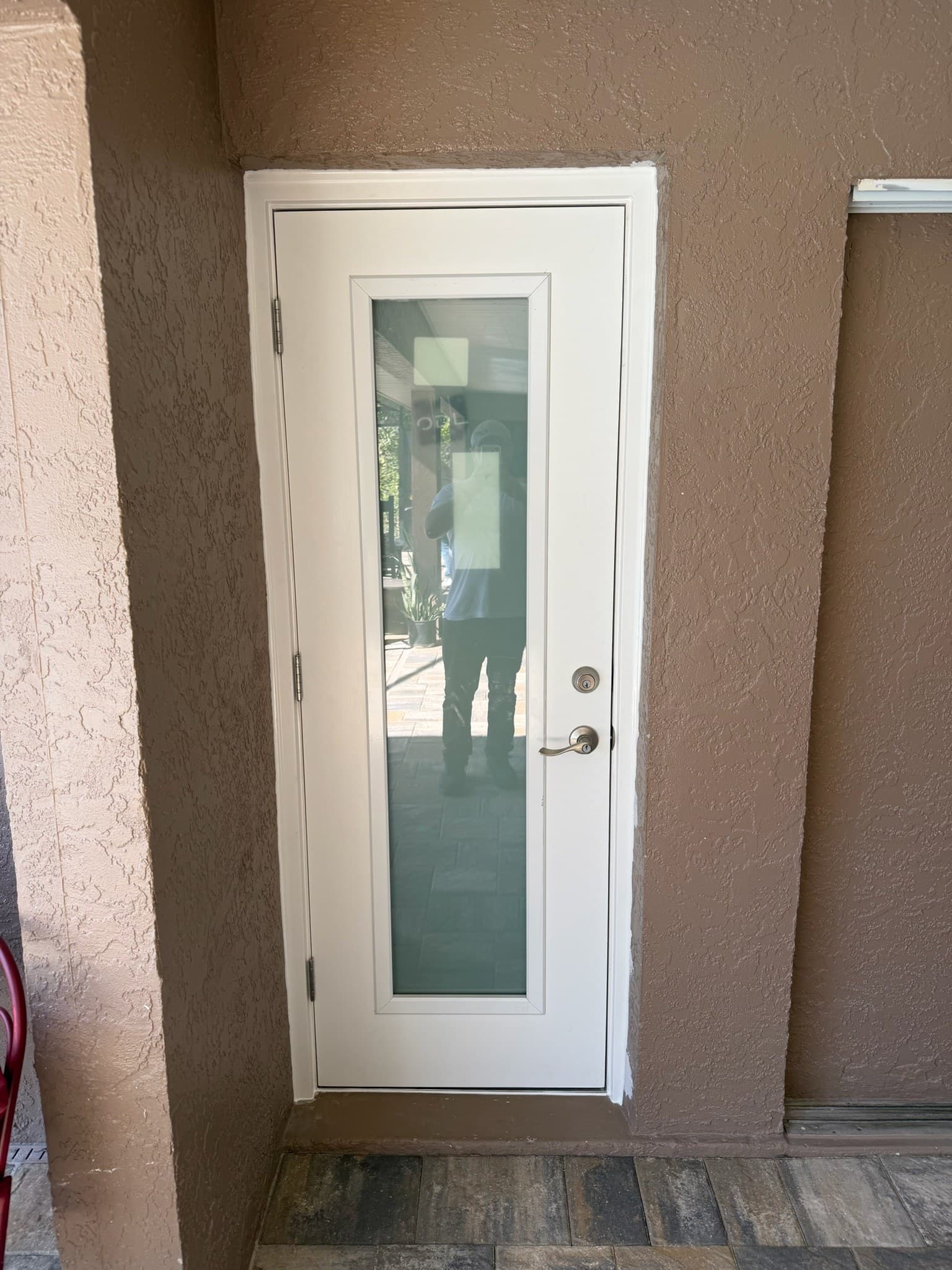
Construction: a skin, a core, and a frame
A steel entry door is a thin steel skin, usually 24 or 26 gauge, laminated over a rigid foam core, with a wood or steel internal frame carrying the hinges and the lock bore, the same basic recipe as a fiberglass door with steel standing in for the composite skin. The steel itself is thin enough to dent, which surprises people who assume more metal is involved than there actually is. What gives a steel door its strength isn't the thickness of that skin, it's the foam core bonded to it, which stiffens the whole panel the way a laminated beam is stronger than the sum of its layers.
The internal frame matters the same way it does on fiberglass: a full wood perimeter frame holds a hinge screw and a strike plate more securely over years of daily use than small hardware blocks embedded only at those points. It's invisible once the door is finished, and it's a real difference between a door that still swings tight after a decade and one that starts to feel loose at the hinges after a few years.
Security: the marketing claim versus the reality
Steel doors get sold on security more than any other material, and the instinct makes sense: steel sounds impenetrable. The reality, covered in more depth on our door replacement overview, is that a residential entry door almost never fails at the slab in a forced entry attempt, no matter what it's made of. It fails at the jamb, where the strike plate is screwed into thin trim material with a shim gap behind it, and the wood around the screws splits before the steel slab shows any damage at all. A steel door with a weak strike plate installation is not meaningfully more secure than a fiberglass door with a properly reinforced one.
Where steel does earn its reputation honestly is resistance to being physically breached through the slab itself, kicked through or pried through rather than forced at the lock. That's a real advantage over wood and a genuine one over fiberglass, though it's a less common failure mode than a jamb giving way. The honest summary: steel is a solid security choice, but the strike plate screws and the deadbolt throw length do more for your actual security than the slab material does, on any door.
Two honest weaknesses
Steel has real downsides and there's no reason to dress them up.
It dents. A thin steel skin over foam has no give, so a hard, concentrated impact, a dropped tool, a bike kicked against it, a bad hailstorm, leaves a permanent dimple rather than flexing back out. It's the tradeoff for the stiffness the foam core provides, and it's the single most common complaint we hear from steel door owners a few years in.
It rusts, starting at any breach in the finish. The steel skin is protected by a factory finish, paint or a primer coat under paint, and that finish is the only thing standing between the metal and moisture. Once that layer is broken, a deep scratch, a chip at a corner, a spot where the finish wore through around the lockset, rust starts right there and spreads under the paint from that point outward. It doesn't happen because the door is bad steel, it happens because steel does what steel does once air and water reach it, and it's worth checking a steel door over once a year for exactly this kind of breach.
Repainting and touch-up
The upside of both weaknesses is that they're fixable early. A dent that hasn't broken the paint is cosmetic, though steel doesn't pop back out the way it went in, so a bad dent is usually a live-with-it situation rather than a repair. A chip or scratch down to bare metal is worth addressing fast: sand back to clean metal, prime, and repaint before rust gets a foothold, because once rust starts under the surrounding paint it keeps spreading even after you've repainted over it, and the only real fix at that point is cutting out the affected area or replacing the slab. A steel door kept ahead of its finish will outlast one that gets ignored for years, even though they started identical.
Where steel is genuinely the right choice
Steel isn't a compromise material, it's the correct choice in several situations. A side door or a garage entry that takes less weather exposure and less daily abuse than a front door is a good fit, since the dent and finish risks matter less on a door people barely look at. A rental property, where the owner wants durability without paying for the refinishing schedule a wood door demands, is a natural fit too. And on a tight budget where the choice is a solid steel door now or waiting to afford fiberglass later, a well-installed steel door with a properly reinforced frame is a genuinely good door, not a lesser one. Where steel struggles is a highly visible front entry in full weather exposure, where the dent risk and the ongoing finish maintenance are working against the one spot in the house most people actually look at.
Frequently asked questions
Are steel doors actually more secure than fiberglass?
Against a prying or kick-through attempt on the slab itself, yes, steel has a real edge. Against the far more common forced-entry failure, the strike plate tearing out of the jamb, the door material barely matters. A properly reinforced jamb and strike plate do more for security than the choice between steel and fiberglass.
Can a dent in a steel door be fixed?
Sometimes minimized, but steel doesn't spring back the way it dented, so a noticeable dent is usually permanent unless the panel is replaced. Catching a scratch or chip before it dents through to bare metal and rusts is the more realistic maintenance goal.
How do I stop a steel door from rusting?
Check the finish once or twice a year, especially around the lockset, hinges, and bottom edge where it takes the most contact. Any spot down to bare metal should be sanded, primed, and repainted before it sits exposed through a season of rain and humidity. Once rust starts under the paint it spreads, so early touch-up is the whole game.
Is a steel door a good choice for a front entry?
It can be, especially on a budget, but it's the material most affected by weather exposure and daily handling on the most-used, most-visible door in the house. If the entry gets full weather exposure and you'd rather not think about touch-up paint, fiberglass is usually the better fit for a front door specifically, with steel making more sense on a side or garage entry.