
A county built on manufacturing, not tourism
York County's only city, and its county seat, is York itself, founded in 1741 and still known locally as the White Rose City. The county's economy has run on manufacturing for a long time, fabricated metal, machinery, and electronics alongside a real agricultural base, and that history goes back further than most people expect. Pennsylvania rifles were being made here in the 1700s, at a time when a lot of the county was still frontier. The first American-built iron steamboat came out of York County too, decades before steam power was common on American rivers. During World War II, a group of local manufacturers organized what became known as the York Plan, pooling machinery and production capacity across competing companies to turn out war material faster than any of them could have alone, a collaborative approach other manufacturing cities later copied. It's the kind of history that doesn't show up on a postcard, but it explains why York County has always built things rather than just grown them.
Some of the names behind that manufacturing base are still headquartered or operating here today. Harley-Davidson runs its largest facility worldwide out of York. York Barbell, founded in 1932, still operates in the city that once called itself "Muscletown USA." Voith Hydro and BAE Systems both have a real industrial footprint in the county, and two of the best-known names in snack food nationally, Utz Quality Foods and Snyder's of Hanover, are both headquartered here as well. It's a working county, not a scenic backdrop, and the housing stock reflects that as much as anything else does. That combination, heavy industry running alongside a real agricultural base, is part of what makes York County feel like a different kind of market than the Lancaster County towns closest to our shop, where farming has always been the more dominant economy and the factory towns are the exception rather than the rule.
That manufacturing history is also the reason the housing stock in York County's older boroughs looks the way it does. Industrial boomtowns across Pennsylvania tended to grow the same way: a factory or a cluster of them starts hiring, and rowhomes or small frame houses go up fast and close together to house the workforce, built for function rather than for the long haul. York's downtown, Red Lion's worker rows, and Wrightsville's river-trade cottages all trace back to some version of that same pattern, just with a different industry driving it in each town. Understanding which industry built which block is part of how we figure out what we're actually walking into before we ever pull a tape measure.
Housing stock that spans two centuries
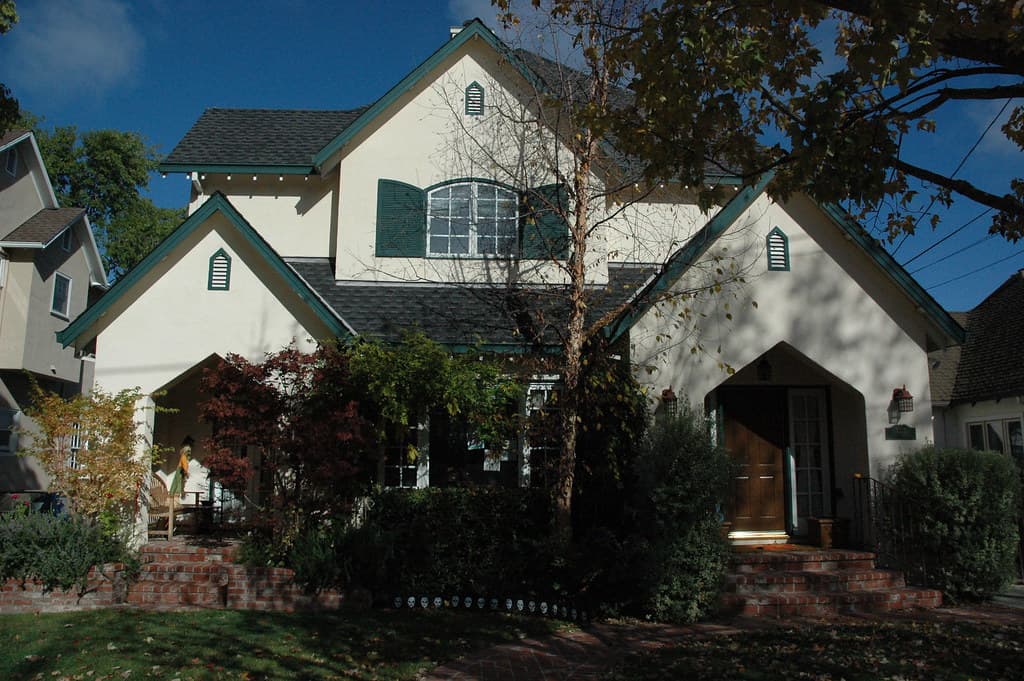
There isn't one version of a York County house. In the older boroughs, downtown York especially, but also river towns like Wrightsville and former industrial towns like Red Lion, the housing stock runs to 19th-century brick rowhomes and vernacular frame workers' houses, built up around whatever industry was hiring at the time, cigar factories in one town, rail and manufacturing in another. Move out into the townships and the county looks different again: farmhouses on larger lots and a good amount of mid-century construction, especially in the more rural stretches like Windsor Township, where agriculture is still the primary use of the land. Entry doors follow the same split. A rowhome door in an older borough is usually original or close to it, set into a frame that's had a hundred years to settle, while a farmhouse door out in the townships is more likely to be a mid-century replacement that's simply worn out on its own timeline.
Walk the older boroughs and the style differences are as much a clue as the age is. Downtown York mixes Italianate rowhomes and Second Empire houses with mansard roofs, ornate for a working city. Wrightsville leans plainer, Federal and Georgian Vernacular facades with simple, symmetrical windows around a centered door. Red Lion is plainer still, narrow frame worker houses built fast and close together during the cigar boom, with less money spent on decoration than on getting a roof over another shift worker's head. None of that is trivia. It tells us what kind of opening we're likely to find before we even get out of the truck.
We've worked on both ends of that range, and the honest answer is that a quote for one doesn't transfer to the other. An original window opening in a Red Lion rowhome and a builder-grade unit in a mid-century township farmhouse are two different jobs wearing the same county name, and we price and measure them that way rather than treating "York County" as a single job type. If you're dealing with a house on the older end of that range, our page on older homes covers what to expect before you get a quote for either repair or replacement.
A county on the other side of the river
The Susquehanna River is the real dividing line in our service area, and York County grew up as its own manufacturing and rail corridor on the far bank rather than as an extension of Lancaster County's farmland. That's not a knock on the towns over here, it's just a different history: cigar factories in Red Lion, motorcycle manufacturing in York itself, a rail and highway corridor running through Wrightsville and Hallam, and a township like Windsor that stayed agricultural despite sitting inside a county otherwise known for industry. We cover all of it, but we don't pretend the drive or the housing stock is the same as what we see closer to East Earl, and we'd rather set that expectation up front than have a York County homeowner assume we're treating the job the same as one ten minutes from our shop.
Worth clearing up while we're on the subject of townships: our Windsor Township listing is specifically Windsor Township, the large rural township along PA-24. It's a different place from the much smaller Windsor Borough and from Lower Windsor Township near Long Level and Accomac. All three share part of a name and sit in the same general area of the county, but they're separate municipalities with different characters, and we'd rather be precise about which one we're talking about than let a homeowner assume we mean whichever Windsor happens to be closest to them.
Whichever side of the river the job is on, the crew doesn't change. The same people who measure a job in Blue Ball or New Holland are the ones who show up in York or Windsor Township. We don't hand York County jobs off to a separate team just because the drive is longer, and the quote you get reflects one on-site visit and one number, not a base estimate plus a distance adjustment tacked on later.
Repair or replace looks different depending on the town
Our repair-or-replace guide covers the general signs either way, but in York County the answer leans in a direction depending on where the house sits. In the older boroughs, York, Wrightsville, and Red Lion especially, a sound original frame is usually worth repairing rather than replacing outright, since a stock replacement unit often doesn't fit the opening without extra carpentry. Out in the townships, Windsor being the clearest example, we see more houses built to dimensions a standard replacement window or door actually fits, which tips the math toward straightforward replacement more often. Neither answer is universal. It's still a house-by-house call, but knowing which pattern a given town tends toward helps set expectations before we've even walked the property.
Material lead times work the same way across the county, too. A custom-sized window for a downtown York rowhome or a Wrightsville frame house takes longer to arrive from the manufacturer than a stock size does, regardless of which side of the river the job is on, and we build that lead time into the schedule when we quote rather than let a homeowner find out about it after signing. Whatever the town, the warranty on the work is the same warranty. We don't shorten the terms because the drive was longer, or write in fine print that treats a York County job differently from one closer to home. The same standards apply whether we're working on a farmhouse in Windsor Township or a rowhome three blocks from the courthouse downtown. It's the same approach we've used since we started taking jobs closer to home in Lancaster County, just applied to a county with a very different history and a longer drive attached to it.
Frequently asked questions
Do you actually work across the river in York County, or is it just listed to look thorough?
We work it. It's a real drive, 40 to 56 minutes depending on the town, and we're upfront that it's farther than our Lancaster County jobs. But it's a standard part of our coverage, not a stretch listing, and the crew that quotes a York County job is the same one that shows up for it.
Does crossing the Susquehanna change how you price a job?
Not the labor or materials. The extra travel time gets built into scheduling rather than tacked on as a surcharge, the same way we handle our longer Berks and Lebanon County drives. You get one number, not a base price plus a distance fee.
Which York County towns do you cover?
York, Wrightsville, Hallam, Red Lion, and Windsor Township are the ones we list individually, covering the range from downtown rowhomes to rural farmhouses. If your town isn't on that list but it's in York County, ask, we likely still cover it.