
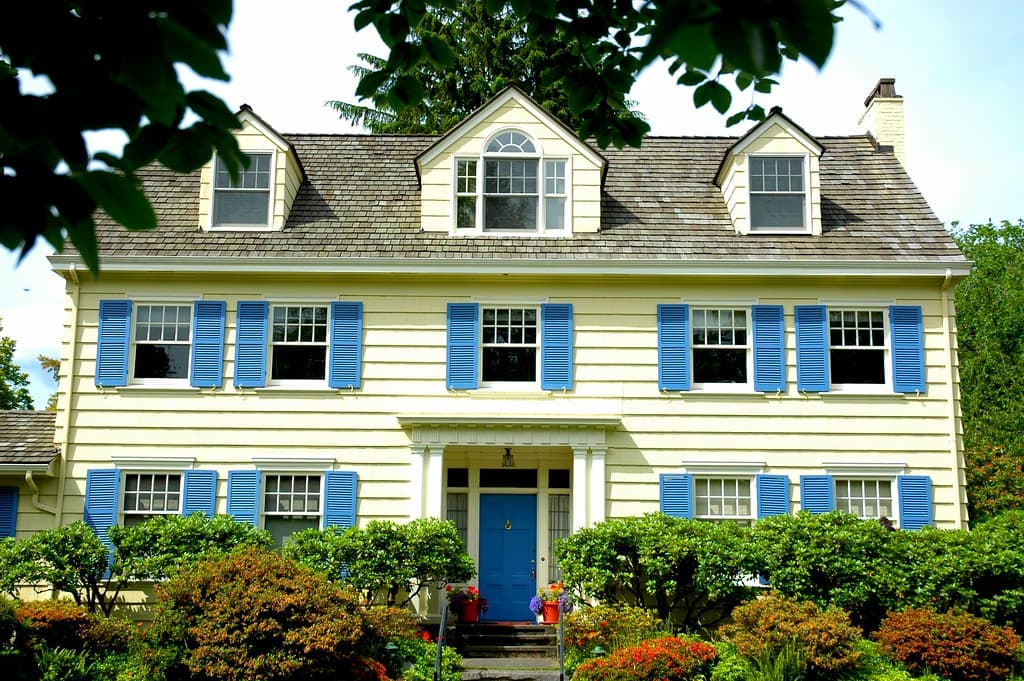
Pennsylvania Dutch Country, one county over
Lebanon County shares its cultural roots with Lancaster County almost exactly. Both were settled in the early 1700s by Pennsylvania German, commonly called Pennsylvania Dutch, and Scotch-Irish farmers, and both are still genuinely agricultural today rather than farmland that's been paved over and rebranded for tourists. Dairy, pork, and produce operations are still a real part of the county's economy, not a heritage-tourism backdrop dressed up for visitors passing through. One product ties directly back to that Pennsylvania Dutch settlement history: Lebanon bologna, a smoked, fermented beef product that local smokehouses were already producing before the 1780s. It's still made commercially in the county today, using methods that trace back to that same tradition, and it's one of the few food products anywhere in Pennsylvania Dutch Country that can genuinely claim a recipe that old without much romanticizing. It's not marketed as an artisanal novelty either; it's sold in ordinary grocery stores throughout the county the same way it always has been.
The county takes its history seriously in a more official sense too. Thirty-one properties and districts across Lebanon County are listed on the National Register of Historic Places, including four National Historic Landmarks, the Cornwall Iron Furnace among them. That's a meaningful concentration of protected and documented history for a county this size, more than a lot of larger counties can claim, and it shapes the kind of work we do here almost as much as it shapes the county's own sense of itself. Those listings aren't concentrated in one town either. They're spread across the county seat, its historic boroughs, and its rural townships, which is part of why almost every town we cover here has at least one building or district worth knowing about before starting exterior work.
That range shows up geographically too. The county is anchored by the City of Lebanon, and wraps around historic communities like Annville, Myerstown, Cornwall, and Jonestown, each with its own settlement story, with enough open farmland between them that it doesn't feel like a single sprawling suburb the way some counties do. Driving from one town to the next usually means driving past working farms, not through continuous development, which is part of what keeps the Pennsylvania Dutch character intact rather than reduced to a marketing phrase on a road sign.
What that history looks like on the ground
For us, that history shows up as housing stock, and it varies more from town to town than people expect. Stone farmhouses built by the county's earliest German and Scotch-Irish settlers are still standing and still lived in, particularly out in the more rural stretches of the county, and a lot of that work looks a lot like what we describe in our guide to windows and doors on older homes. In the boroughs, Victorian-era homes from the 1800s dominate, built during the same industrial stretch that gave the county its iron furnaces and, later, Lebanon's steel plant. And around all of that sits a more ordinary layer of mid-century development, homes built in the decades after World War II that don't get the historic-district attention but make up a real share of what we actually work on day to day. A window or door job in Lebanon County can mean careful, original-opening measuring on a stone farmhouse one week and a straightforward builder-grade swap on a 1960s ranch the next, sometimes in the same town, occasionally on the same street. For a homeowner, what that usually means in practice is that the right approach to a window or door project depends far more on when your specific house was built than on any assumption we'd make based on the county alone. A colonial-era stone farmhouse near Myerstown and a mid-century rancher outside Lebanon might be a few miles apart and call for completely different products, timelines, and even permitting conversations. That's also why we don't quote Lebanon County jobs off a standard size chart. A colonial-era opening, a Victorian double-hung, and a builder-grade vinyl slider from the 1990s can all show up on the same street, and each one gets measured on its own terms before we talk price.
Five towns, five different characters
Even within one county, the five towns we cover don't share much in common beyond the county line. Lebanon, the county seat, is genuinely urban by Lebanon County standards, dense rowhome and Victorian construction built up during the steel era, the kind of housing stock where party walls and on-street parking shape how a job gets planned almost as much as the window itself does. Annville is nearly the opposite, a small, unincorporated village whose Main Street historic district packs three centuries of building styles, log, stone, and Victorian, into an 88.5-acre stretch of road, with Lebanon Valley College adding a genuine college-town rhythm on top of all that history. Myerstown is smaller and plainer than either, a compact borough under a square mile built around German settlement along Tulpehocken Creek, where the age of a house is often more obvious than its style; a limestone farmhouse from the 1700s doesn't look flashy, it just looks old. Cornwall is the one town on this list where local government actively regulates what an exterior renovation can look like, a designated historic overlay district that puts real review requirements on window and door work in parts of the borough, a direct legacy of the Cornwall Iron Furnace and the wealth it generated. And Jonestown is the quiet one: no marquee landmark, no overlay district, just a small, old borough near an interstate exit where the calls we get tend to be about a straightforward window or door job, not a historic-preservation conversation. Knowing which of these five characters a given town has, before a crew ever shows up, changes how we plan the visit, what we expect to find, and sometimes which questions we ask before quoting a price.
Sharing Lancaster's Pennsylvania Dutch heritage, and what that means for old houses
Lebanon County's Pennsylvania Dutch roots aren't just a cultural label, they show up directly in the county's oldest buildings. Pennsylvania German settlers who farmed this part of the state in the 1700s and 1800s built with what was available and durable: local limestone and fieldstone for farmhouses, heavy timber framing for barns, and a construction style meant to last generations rather than to be fashionable. That's the same building tradition that produced Lancaster County's well-known stone farmhouses, and it means a lot of Lebanon County's oldest homes share the same real quirks: thick masonry walls, window and door openings set deep into the wall rather than flush with the siding, and framing dimensions that predate any modern standard size by a couple of centuries. The same tradition shows up in the bank barns scattered across the county's farmland too, a distinctive regional barn style built into a hillside so wagons could reach both the ground floor and the floor above without a ramp, one more example of the practical Pennsylvania Dutch building sense that still stands across Lebanon County today. It's a different set of problems than a 1920s rowhome in Lebanon city or a 1960s rancher outside it, and it calls for a different approach. We can't just order a stock replacement window and expect it to drop into a masonry opening built by hand two hundred years ago; those openings usually need to be measured individually, sometimes require custom sizing, and occasionally reveal settling or moisture issues in the surrounding masonry that have nothing to do with the window itself. That's part of why we treat a colonial-era stone farmhouse job differently from the start, not just as a smaller version of a standard replacement, and part of why the same shared heritage that gives Lancaster and Lebanon counties their character also gives their oldest homes a lot of the same real, practical challenges.
Frequently asked questions
Is Lebanon County part of Pennsylvania Dutch Country?
Yes. It was settled by the same Pennsylvania German and Scotch-Irish farmers who settled Lancaster County, in the same early-1700s wave of migration, and it's held onto that agricultural character ever since. The line between the two counties is really more administrative than it is cultural or historical.
What's a genuine local food product from Lebanon County?
Lebanon bologna. It's a smoked, fermented beef product that Pennsylvania Dutch smokehouses in the county were producing before the 1780s, and it's still made commercially there today using methods that trace back to that same tradition, not a revived or reinvented recipe.
Which Lebanon County towns have the oldest housing stock?
Lebanon's Northside dates to the 1880s, Annville's Main Street historic district includes log houses from the 1700s, and Myerstown has a limestone farmhouse from around 1750. All three are the kind of housing stock where measuring the original opening matters more than ordering off a standard size chart.
Do all five Lebanon County towns you cover have the same rules for exterior work?
No. Cornwall is the only one with a designated historic overlay district requiring review for exterior changes in parts of the borough. The other four don't have anything comparable that we're aware of, though normal building permits still apply everywhere, and it's always worth confirming current requirements with the specific municipality before starting a project.