
Berks County's real character
Reading is the county seat, and has been since Berks County itself was created in 1752, four years after the town was laid out in 1748 along the Schuylkill River and named for Reading, Berkshire, back in England. For most of its history, the county's economy ran on what the river could power and what the canals and rail lines could move. The Schuylkill Canal, completed in 1825, connected Reading down to Philadelphia and the Delaware River, and the Union Canal, finished in 1828, linked it eastward to the Susquehanna near Harrisburg. Both mattered enormously for about half a century, then rail took over. The Philadelphia and Reading Railroad, incorporated in 1833, grew so central to the regional economy that it's still one of the four railroad properties on the classic U.S. Monopoly board, hauling anthracite coal to East Coast markets long after the canal boats had stopped running.
Iron, steel, and textiles built the rest of that economy. Reading's mills and hosiery factories once employed tens of thousands of people, and when the textile industry started moving south in the mid-20th century, a couple of the companies that stayed turned their surplus goods into factory-direct retail. That became the VF Outlet Village, built out of the former Berkshire Knitting Mills buildings that had operated from 1908 to 1975, and for decades it stood as one of the largest outlet malls in the United States, often credited as the first multi-tenant manufacturers' outlet center in the country. It closed for good in 2020, but the outlet-shopping identity it created stuck to the region long after the original stores did, one more example of Berks County adapting an old industrial strength into something new rather than starting over.
The Schuylkill River and the iron economy
The iron industry is the part of this history that shows up most directly in the towns we actually work in. Long before Reading became a manufacturing city, ironmasters were building forges and furnaces up and down the Schuylkill's tributaries, wherever there was water power, iron ore, limestone, and enough woodland to keep a charcoal supply going. William Bird's forge in Birdsboro, built around 1740, and Joanna Furnace in the Hay Creek Valley near Geigertown, which went into blast in 1791, were both part of that same network, and both were still active when Reading itself was just getting started as a market town. Bird's son Mark ran his ironworks hard enough during the Revolutionary War that he briefly became the largest iron producer in the American colonies, supplying cannon and shot to the Continental Army.
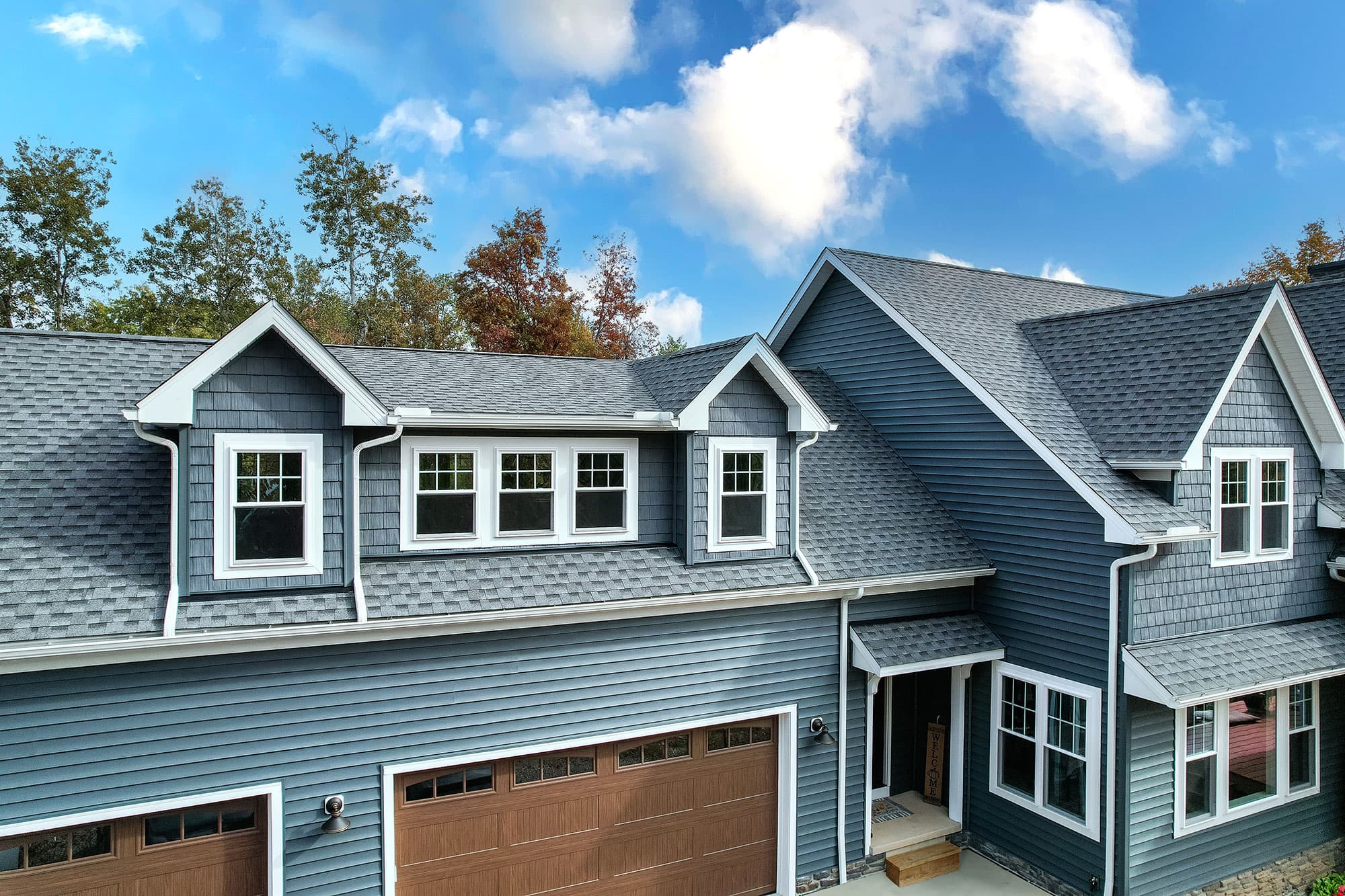
By the 19th century, Berks County ore was losing ground to the upper Great Lakes deposits that fed Pittsburgh's mills, so the county shifted from mining iron to fabricating it, alongside a textile industry that grew into some of the largest hosiery mills in the country. That shift is part of why the housing stock looks the way it does across our service area today. Forge towns and mill towns like Birdsboro built dense rows of worker housing, twins and singles set close together, meant to put as many families as possible within walking distance of the mill. Crossroads villages like Morgantown grew up differently, around travel and trade rather than a single employer. And the smallest, most rural corners, Geigertown and New Morgan among them, never industrialized much at all, which is exactly why they still look and feel the way they do.
A different landscape south of Reading
The stretch of Berks County we work in, Morgantown, New Morgan, Geigertown, Birdsboro, and Douglassville, looks almost nothing like Reading's urban core. This is small-borough and rural-township country: former iron-forge and mill towns, crossroads villages, and farmland, closer in character to the Lancaster County towns we started in than to the city 20 to 30 minutes north.
Birdsboro was built around William Bird's 18th-century iron forge and stayed an industrial town well into the 1900s. Morgantown grew up at the junction of PA Route 23 and PA Route 10, a crossroads that's been in use since Conestoga Road was first laid out in the 1680s and that later became a Pennsylvania Turnpike interchange. Smaller communities like New Morgan and Geigertown never developed much of a commercial center at all, they've stayed rural by default rather than by any planning effort. It's a part of the county that gets less attention than Reading, but it isn't short on history. It's just a different kind.
Five towns, five different stories
Even within the small stretch of southern Berks County we cover, no two towns got here the same way. Morgantown grew up at a crossroads, laid out formally in 1770 by Captain Jacob Morgan, and it's been defined by through-traffic ever since, first Conestoga Road, later the Pennsylvania Turnpike interchange that put a second layer of newer construction next to its 19th-century Main Street. Birdsboro is closer to the opposite story, a single-employer iron-forge town built by the Bird family and later the Brooke family, with a Main Street of early-1800s twins and singles that grew up shoulder to shoulder around the mill rather than around travelers passing through.
Douglassville is its own kind of contrast, four buildings from the 1700s clustered in Morlatton Village standing within a few minutes of subdivisions built in the last twenty years, with almost nothing architecturally in common between them. New Morgan and Geigertown are the two extremes on the other end. New Morgan is a borough that exists mostly on paper, created in 1988 around a Victorian-village development that was never built, with a 2020 population of just 54. Geigertown never incorporated at all and never had much of a commercial center, just a rural stretch of the Hay Creek Valley that still carries the old Joanna Furnace iron-industry story in its name and its ruins. None of these five towns would make sense as a template for each other, which is part of why we measure and quote every job in each of them on its own terms.
Frequently asked questions
How far is southern Berks County from your shop in East Earl?
It ranges by town. Morgantown is about 15 minutes, New Morgan around 17, Geigertown roughly 22, Birdsboro about 27, and Douglassville close to 37. All of it is inside our regular service area, not a special trip, and the drive time is built into how we schedule rather than tacked on as a surprise fee.
Is the housing stock out here older than what you see near East Earl?
Some of it, and some of it much newer. Birdsboro's Main Street dates to the early 1800s and Douglassville has structures from the 1700s, but towns like Morgantown also have plenty of recent construction near the Turnpike, and New Morgan barely has any housing stock at all. We see the full range, sometimes within the same town.
Do you cover all of Berks County, or just these five towns?
We focus on the southern end of the county, the towns closest to our shop in East Earl and the ones with the most in common with our Lancaster County home base. If you're elsewhere in Berks County, reach out anyway. We're often willing to make the drive, and we quote the travel honestly up front rather than guessing over the phone.